Match the duvet to the cover dimensions
Check the two labels, the closure and the existing bedding before ordering a replacement cover.
Updated:
Compare the two products directly
Begin with the duvet you own, not the mattress beneath it. Read its width and length and compare them with the proposed cover specification. John Lewis treats duvet size as a distinct part of the bedding decision. A mattress label is useful context, but it is not a substitute for checking the two pieces that must fit together.
Write the measurements in the same order and units. If the duvet label is missing, ask its manufacturer for the specification or measure the item carefully without stretching it. Mark an uncertain measurement as approximate so that it does not later become a false statement of the original product size.
John Lewis: duvet and pillow buying guide ?

Do not rely on the name alone
The National Bed Federation warns that mattress size names can conceal dimensional differences. Keep that caution in mind when organising the whole bed, but verify the duvet and cover using their own exact listings rather than transferring a mattress size table to them.
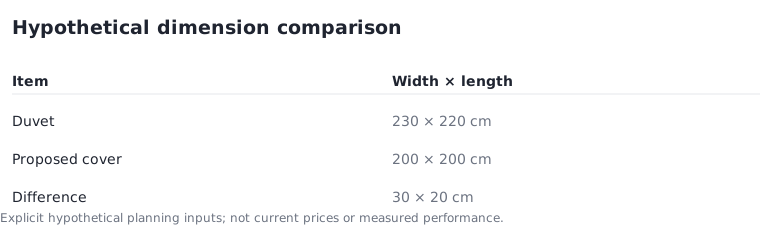
For a hypothetical example, a duvet is 230 centimetres wide and 220 long. A cover listed as 200 by 200 differs by 30 centimetres in width and 20 in length. Those numbers are invented comparison inputs, not a list of UK standard duvet sizes. The mismatch is a reason to check the intended product, not a recommendation to force one item inside another.
National Bed Federation: shopping for a new bed ?
Inspect the closure and orientation
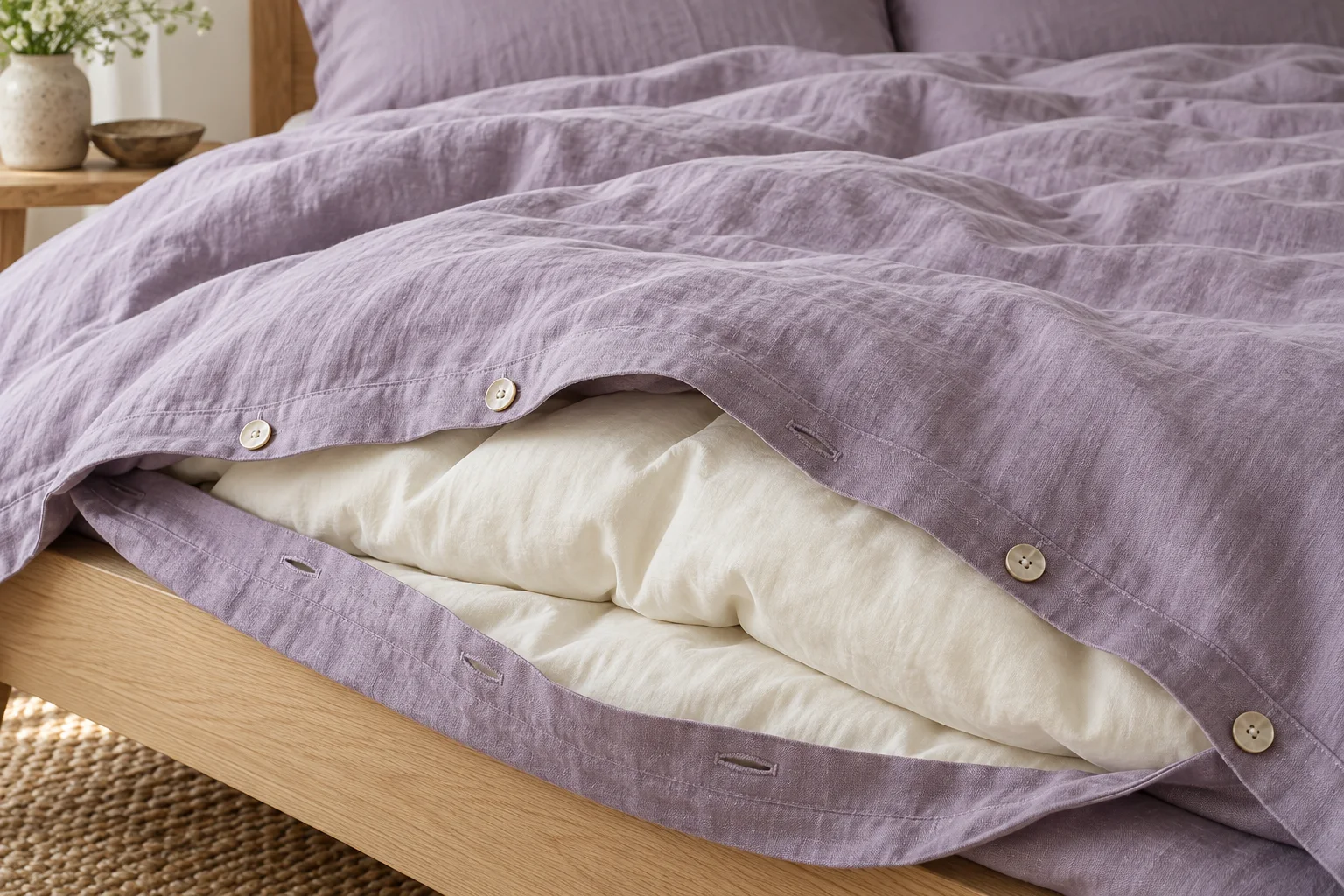
Look at where the opening sits and how it fastens. The product description or a clear detail photograph should show whether the arrangement suits the way you change bedding. Keep any dimensions separate from the visual impression of a neatly styled bed.
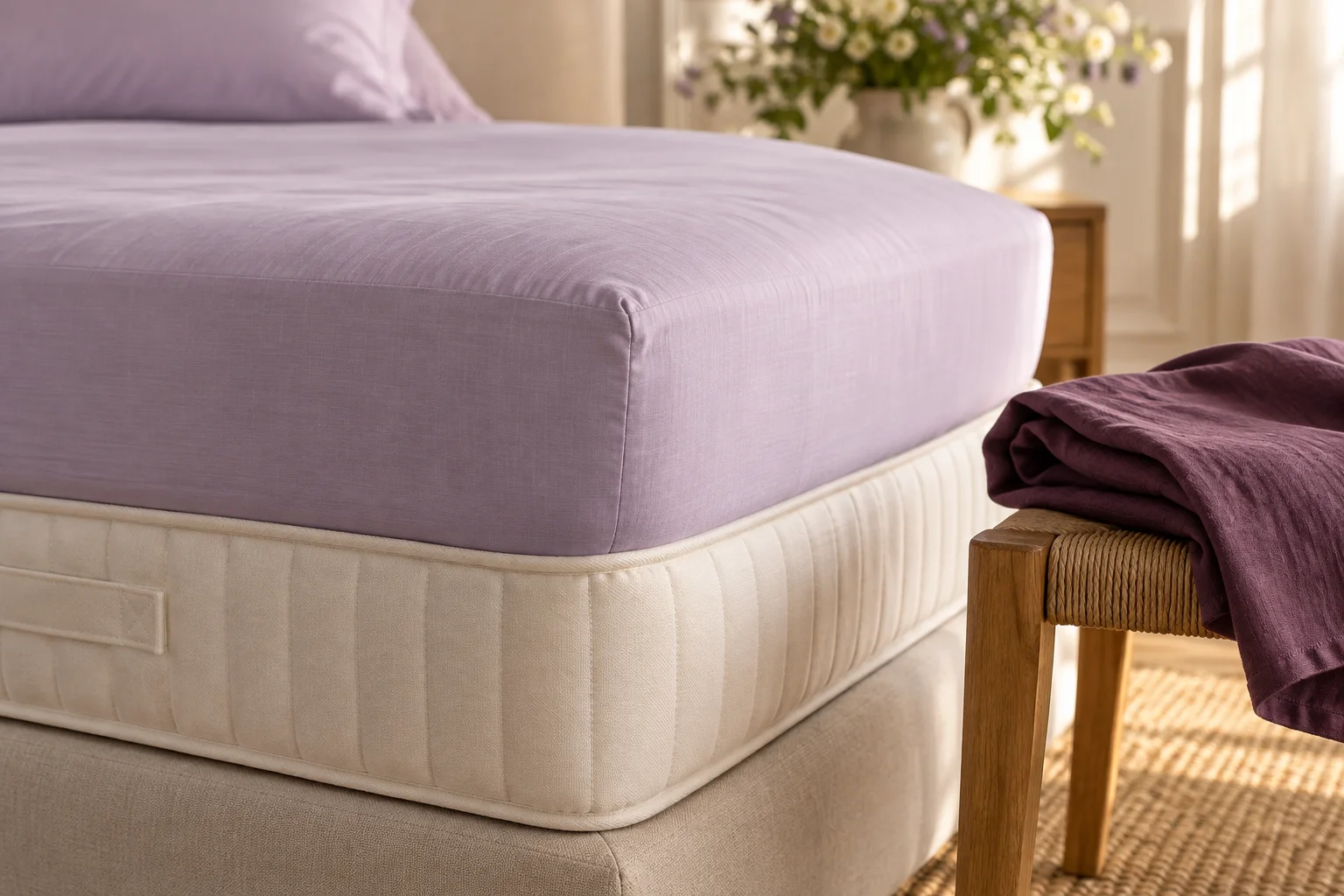
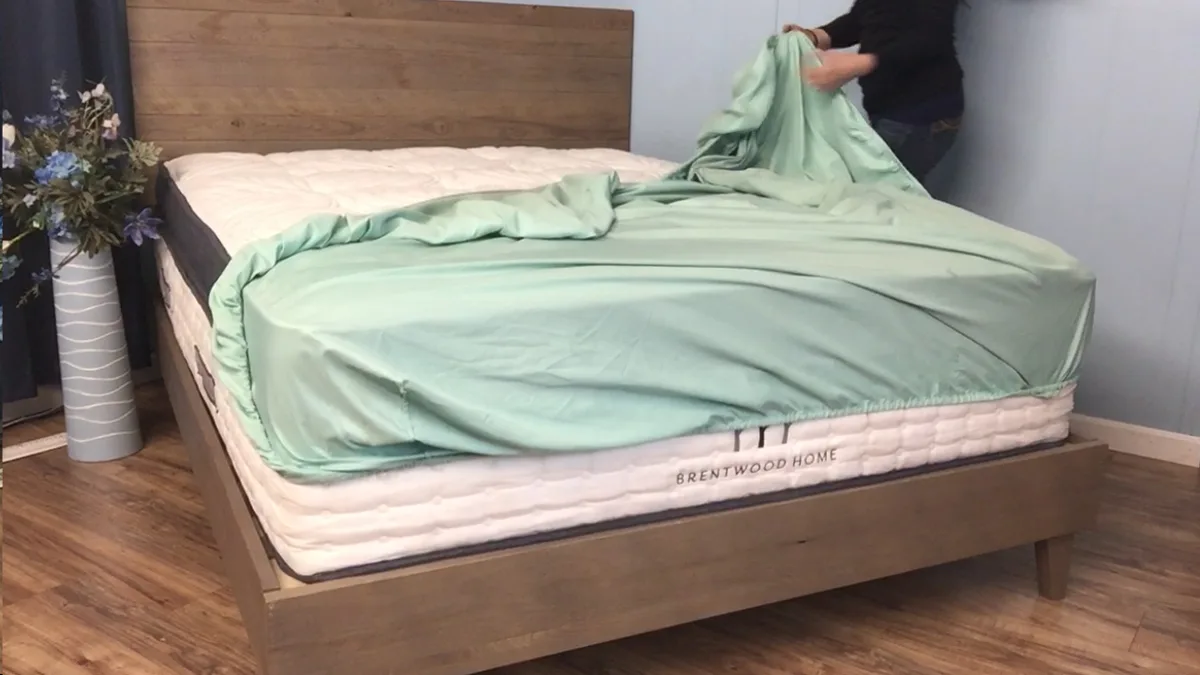
The licensed duvet photograph shows stitching and folds, while the fitted-sheet photograph shows a different kind of bedding fit. Neither demonstrates how a particular cover closes. If the listing leaves that detail unclear, ask for a product-specific image or written explanation before ordering. A small unanswered practical question can matter more than a coordinating colour.
Budget for the pieces you need
Assume a replacement cover costs £45 and matching pillowcases cost £20. The complete assumed purchase is £65. If suitable pillowcases can be retained, the cover-only total stays at £45. These illustrative amounts are not current offers and do not imply that matching pieces must be bought together.
Check whether the advertised price includes pillowcases and how many. Record each included item rather than relying on the word set. If you want a spare cover for laundry, add it deliberately to the plan. A second assumed £45 cover increases the £65 bundle to £110, which makes that optional choice visible.


Keep the care information accessible
Read the care label for the new cover and follow the product instructions. Do not assume it can be washed or dried in exactly the same way as the duvet inside it. Store the specifications and label photographs together so that future replacements can be checked without guessing.
Before completing the order, compare the basket description with the measurements you wrote down. The useful outcome is a matched pair of product specifications and a clear list of included pieces. Styling photographs can help you choose an appearance, but dimensional compatibility should be settled with information that can be saved and checked.