Check mattress depth before ordering sheets
Record the full sleeping stack and compare it with the exact sheet specification rather than a size name alone.
Updated:
Record three dimensions
A mattress width and length are only part of a fitted-sheet check. Measure the depth as well, and distinguish the bare mattress from any extra layer you intend to keep beneath the sheet. Start with the manufacturer dimensions, then use a careful measurement of the existing setup where that is the item being retained.
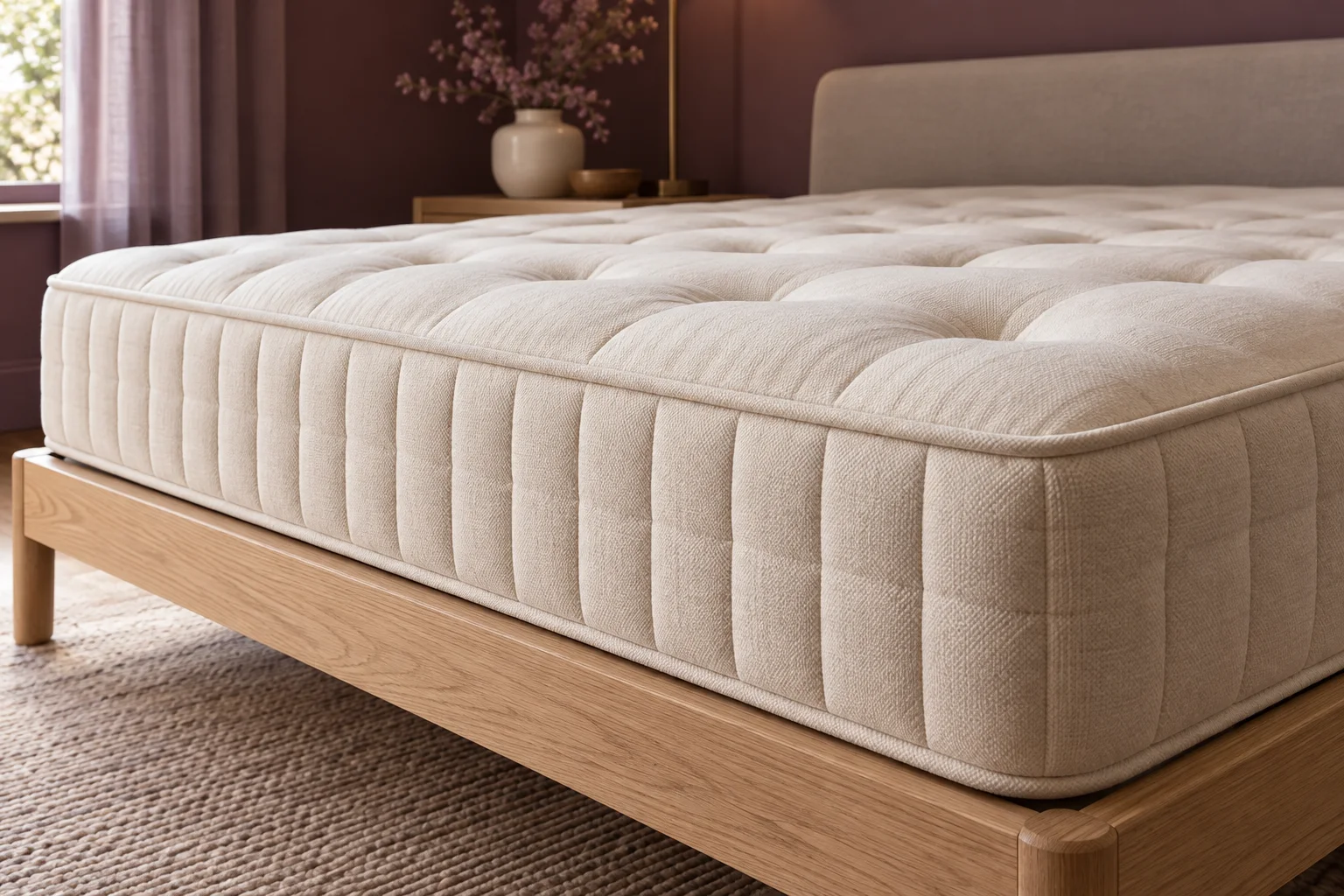
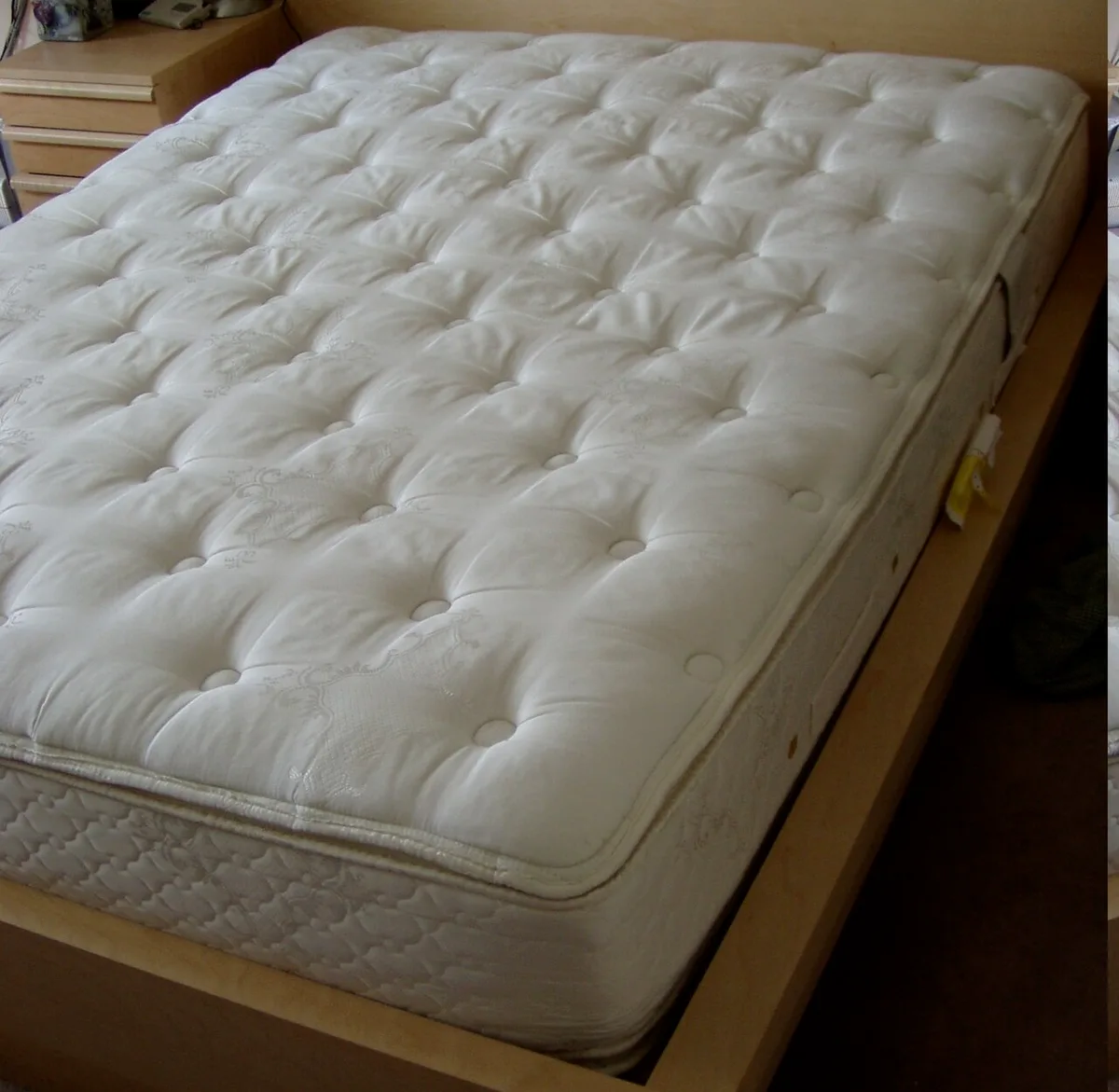
The National Bed Federation warns that mattress names can hide differences in dimensions. Keep centimetres beside the name in your notes. A sheet described with the same broad size label still needs its own specification checked. The historical photographs illustrate different layers and edges; they do not provide a UK sizing template.
National Bed Federation: shopping for a new bed ?
Make the stack explicit
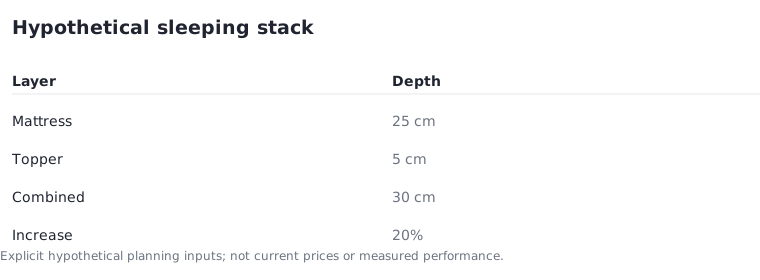
In a hypothetical setup, a mattress is 25 centimetres deep and a topper adds 5. The combined depth is 30 centimetres, an increase of 20% over the mattress alone. That arithmetic describes the assumed stack; it does not establish which sheet will fit, because the sheet design and the maker's stated fit range also matter.
Do not equate an advertised pocket dimension automatically with a guaranteed maximum mattress depth. Read the product wording and ask the retailer if the distinction is unclear. Include any substantial layer that sits under the sheet, and check whether the topper moves or changes the shape at the corners.
Look at the corners before buying a set
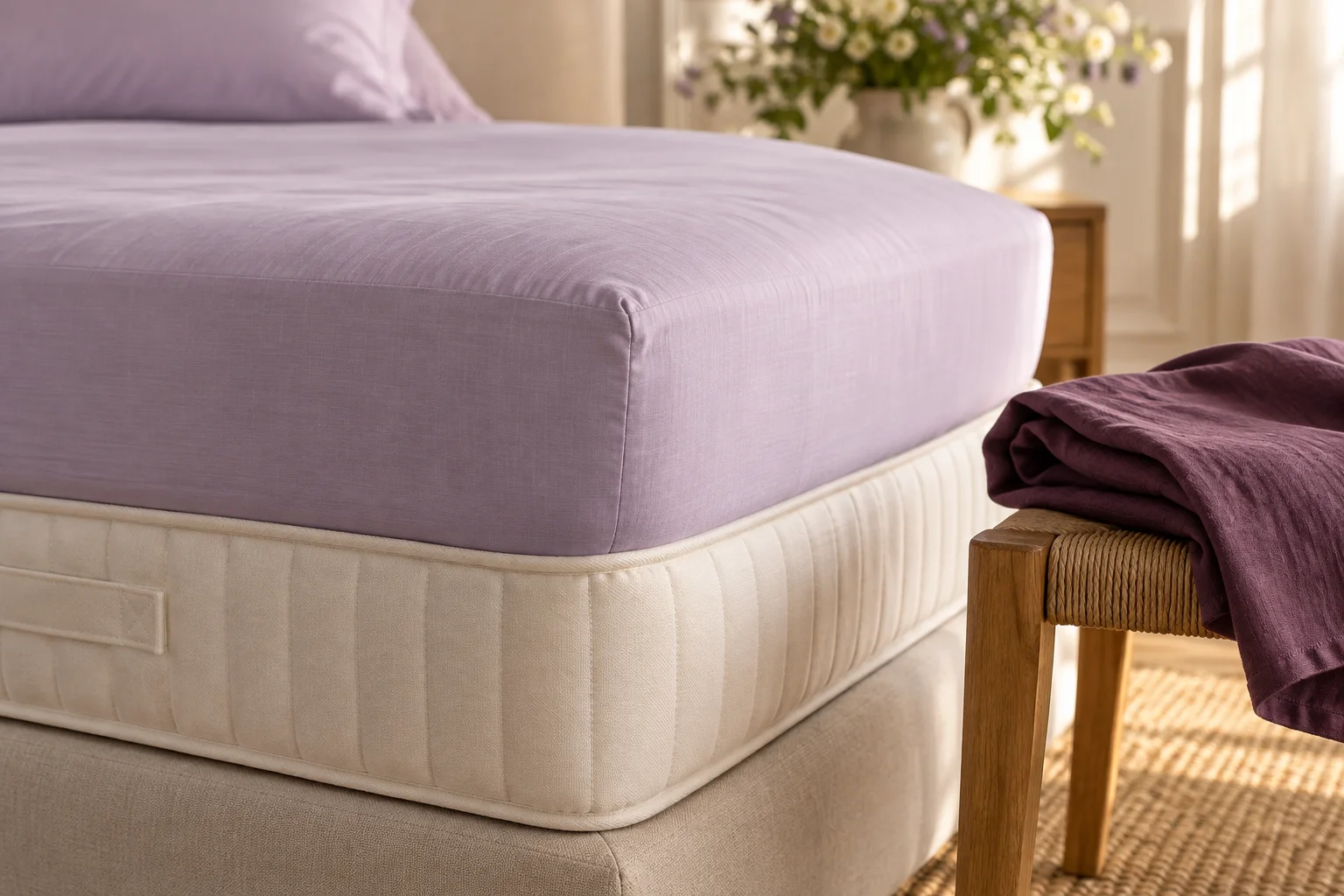
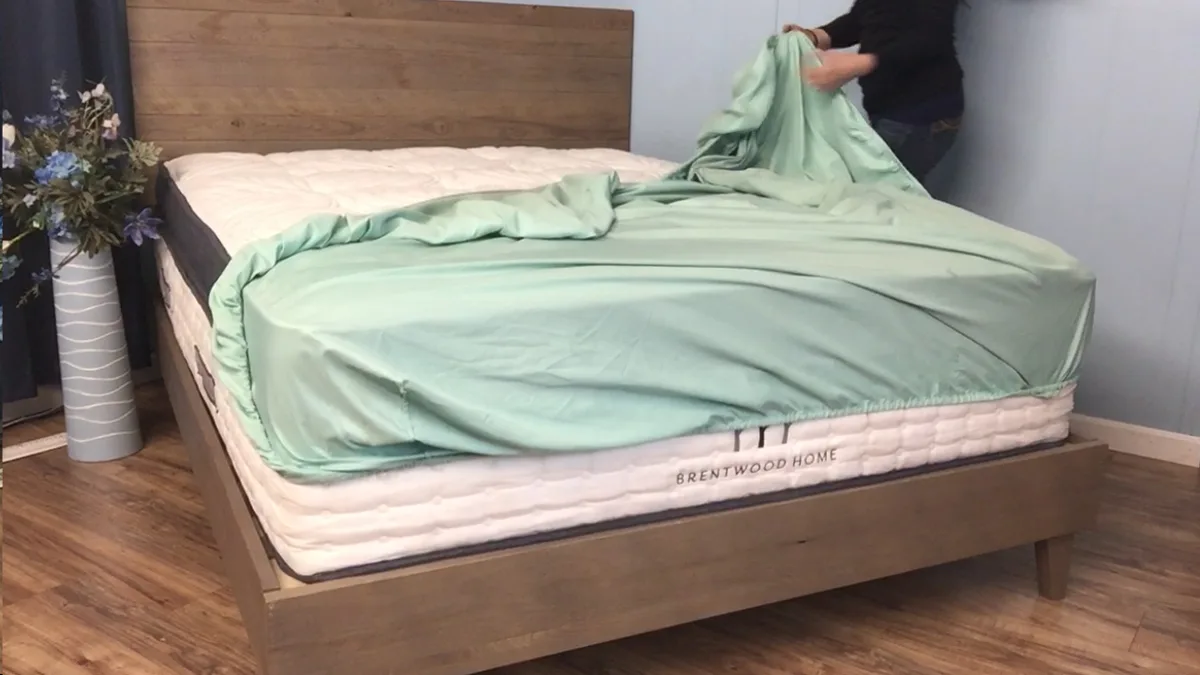
The real fitted-sheet photograph shows fabric being pulled around a mattress rather than lying flat like a duvet cover. It is useful for identifying the kind of fit you need to inspect. It does not establish the dimensions, fibre performance or suitability of any item on your shortlist.
If you have an existing sheet that fits well, retain its label and measurements as a reference, but compare the replacement specification independently. A matching colour or collection name is not a dimensional check. Write down whether the sheet is fitted or flat so that an attractive photograph does not obscure a different construction.
Cost the usable set
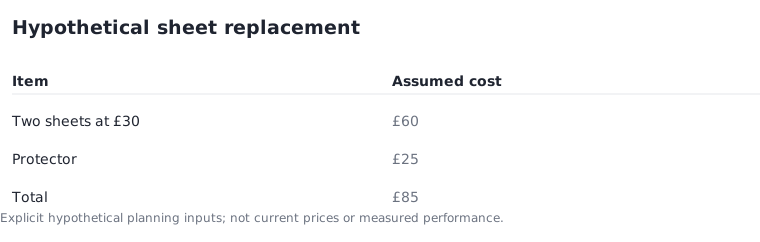
Assume one suitable fitted sheet costs £30 and you want two for a laundry rotation. The sheet budget is then £60. Adding an assumed £25 protector produces an £85 total. These are invented planning figures, not current offers or a suggestion that every household needs the same number of pieces.
Keep a replacement duvet cover or pillows outside that total unless they are actually required. John Lewis treats duvet and pillow selection as separate decisions. A disciplined list can prevent a simple sheet-fit problem from turning into an unnecessary complete bedding purchase. Check each retained piece before marking it as reusable.
John Lewis: duvet and pillow buying guide ?
Save the fit and care information
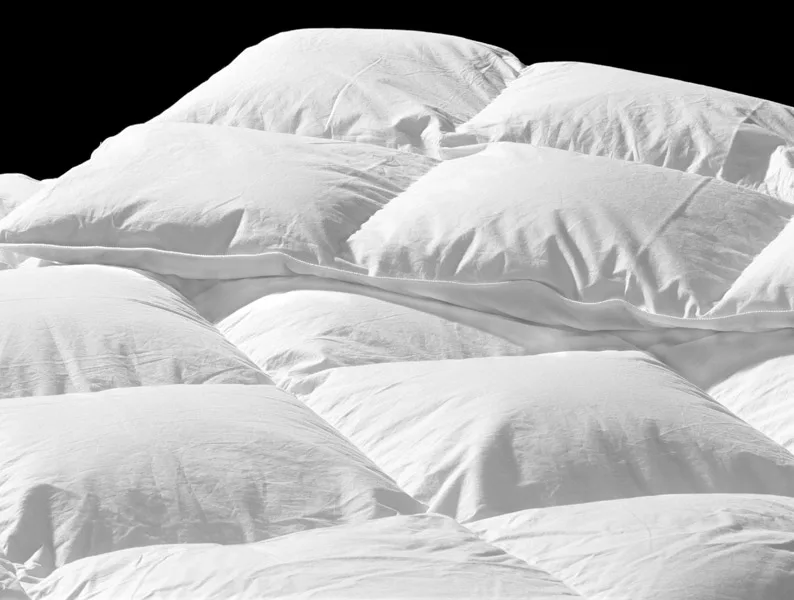
Before washing a new item, read its care label and the retailer's conditions. Follow the supplied instructions rather than assuming that every white sheet takes the same wash programme. For the mattress itself, the National Bed Federation likewise directs owners towards the manufacturer's care advice.
Keep the sheet specification, mattress dimensions and care label together in a note or photograph. If the setup later gains a topper, revisit the fit calculation. The useful result is a repeatable description of your own bed, with enough detail to order the right shape and depth without relying on memory.