Plan the extra layer before buying a topper
Check dimensions, total depth, sheet fit and the underlying mattress before adding another component.
Updated:
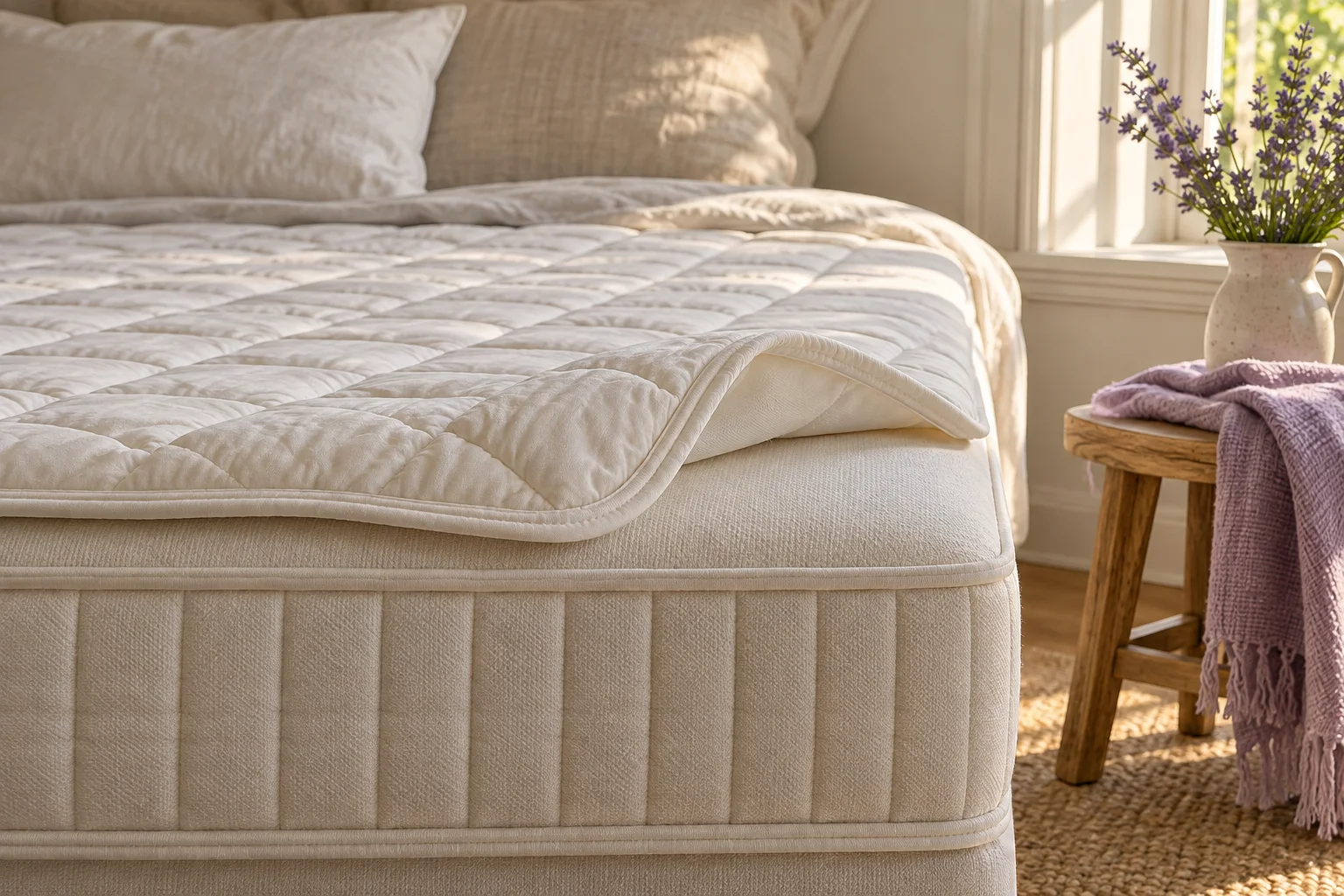
Describe the existing bed first
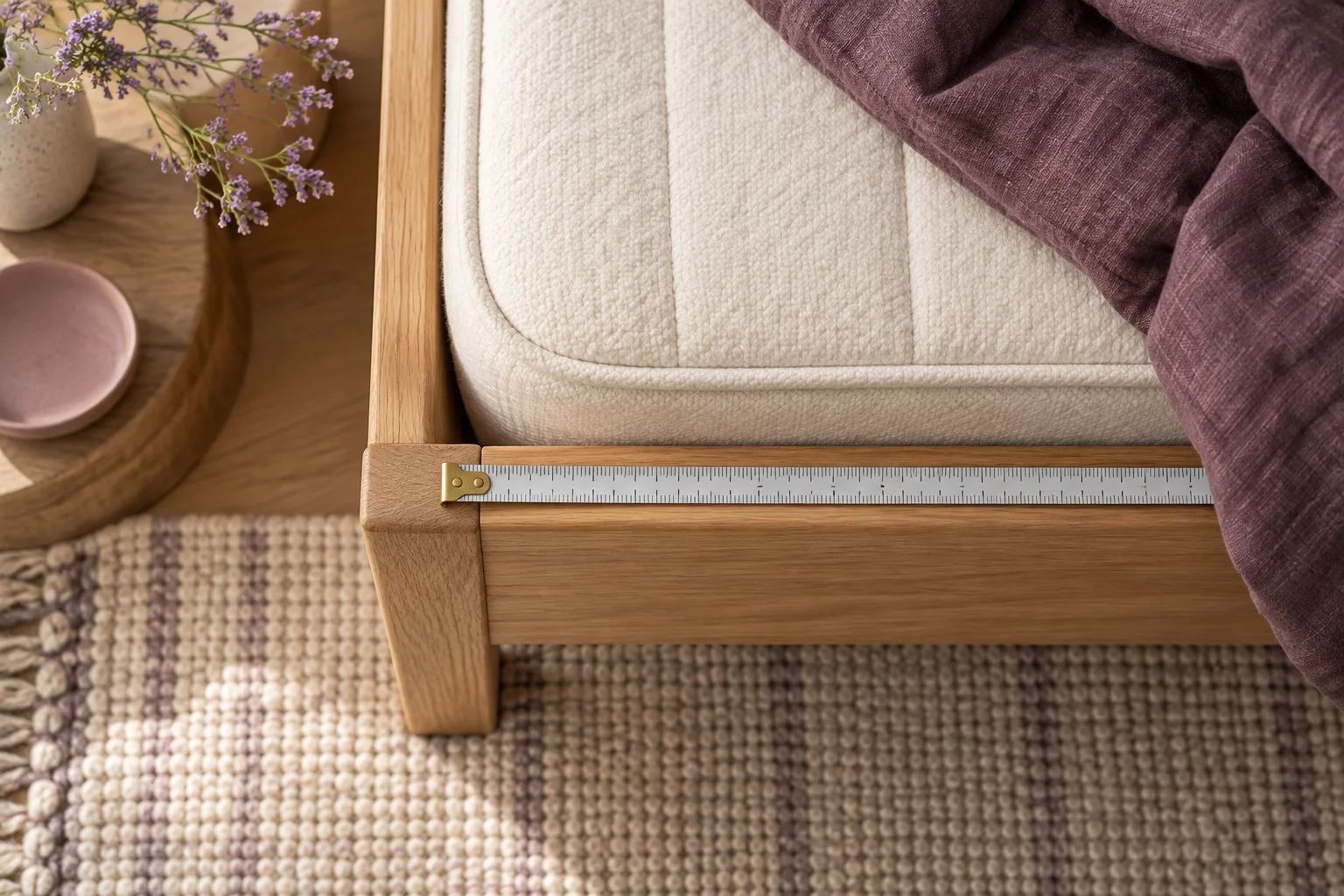
Start with the mattress you already have. Record its width, length, depth and model, together with the base underneath it. The National Bed Federation warns that size names alone do not establish exact dimensions, so keep measurements beside the name when checking a proposed topper.
This guide treats a topper as an additional component, not as a way to certify or repair a damaged mattress or base. If the existing setup has a structural problem, resolve that using the relevant manufacturer guidance or appropriate professional assessment. Adding a layer does not answer the underlying compatibility or condition question.
National Bed Federation: shopping for a new bed ?
Calculate the new stack
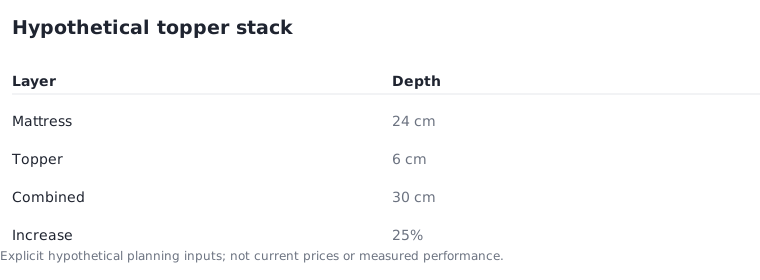
Assume the existing mattress is 24 centimetres deep and the proposed topper is 6 centimetres deep. The combined stack is 30 centimetres, an increase of 25% over the mattress alone. These hypothetical figures make the depth change visible; they do not establish comfort, support or compatibility with a particular fitted sheet.
Read the topper's exact width and length as well. A similar name does not prove that its edges will align with the mattress. Check how the product is intended to stay in position and whether the manufacturer specifies any restrictions on the underlying surface. Keep unanswered details marked as questions rather than filling them with assumptions.
Recheck the sheet and protector
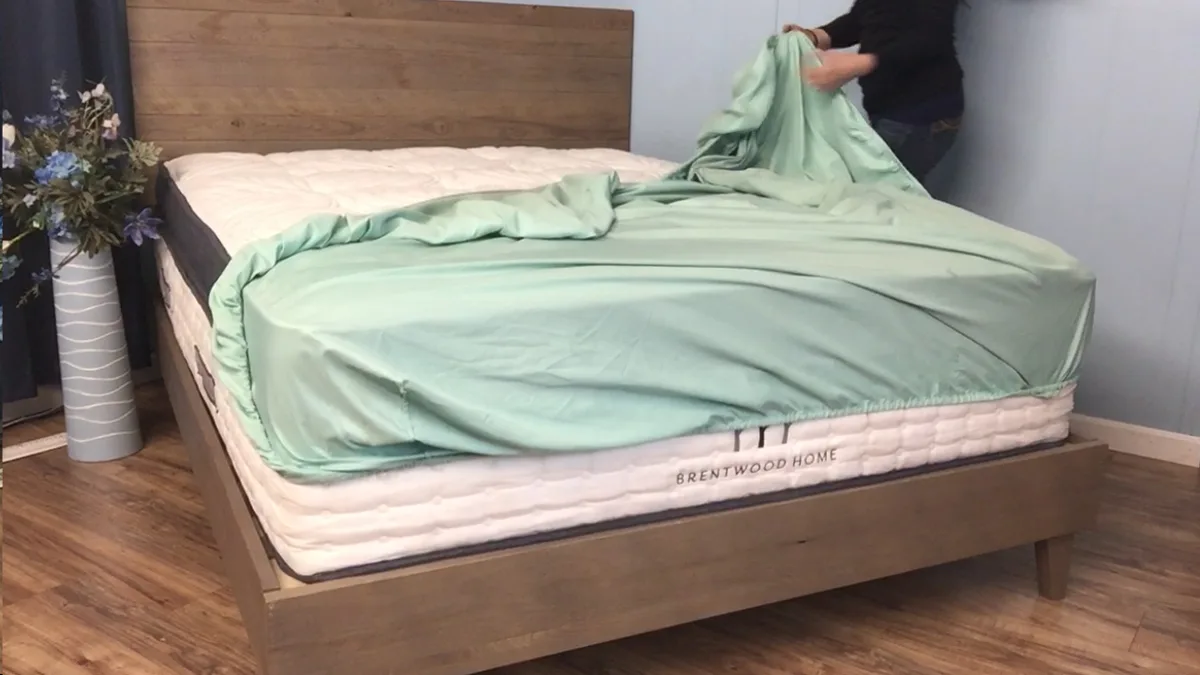
The sheet now needs to accommodate the arrangement you intend to use. Compare its stated fit range with the complete stack and read any product-specific wording carefully. Do not assume that an advertised pocket dimension is automatically a promise about every possible combination of layers.
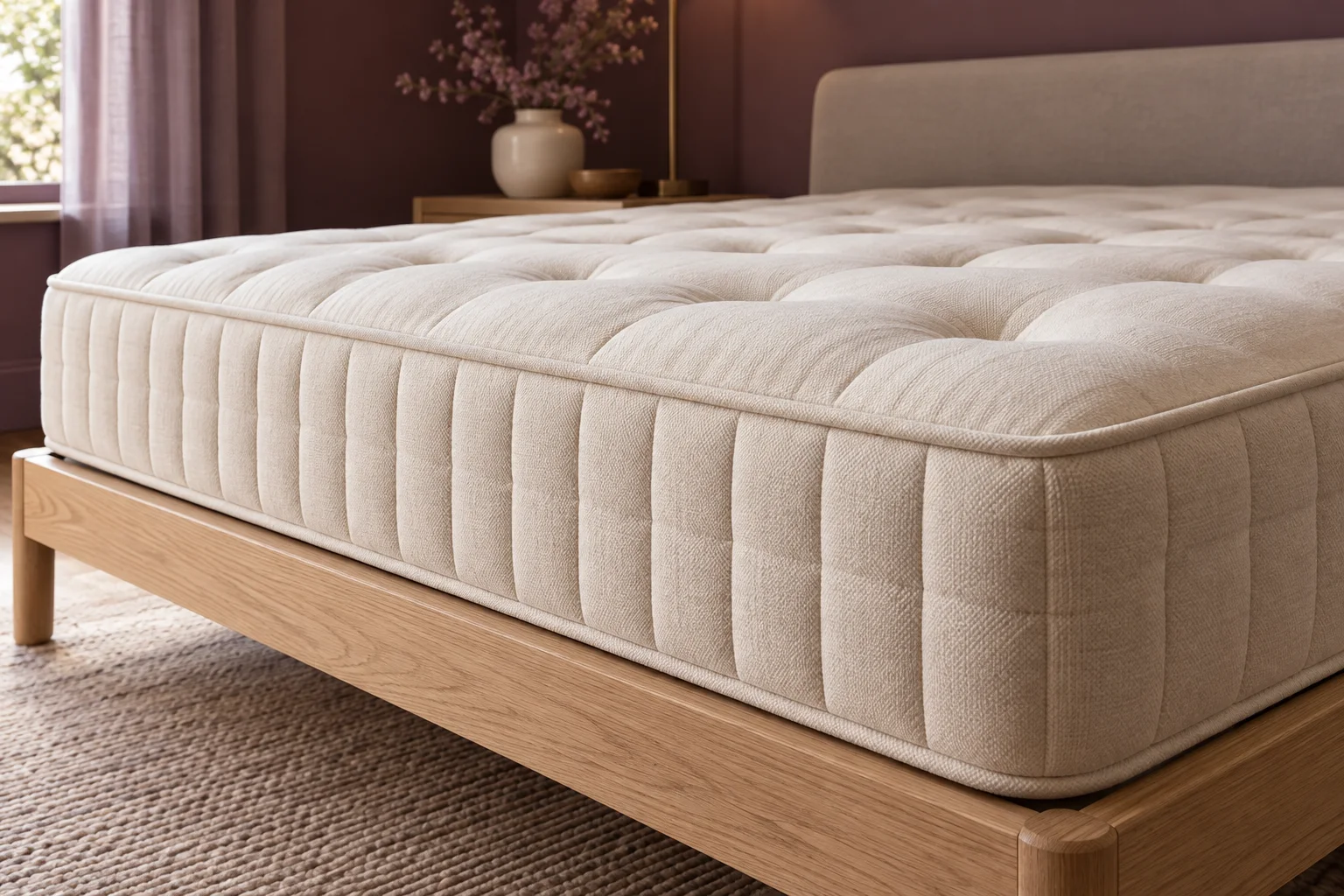
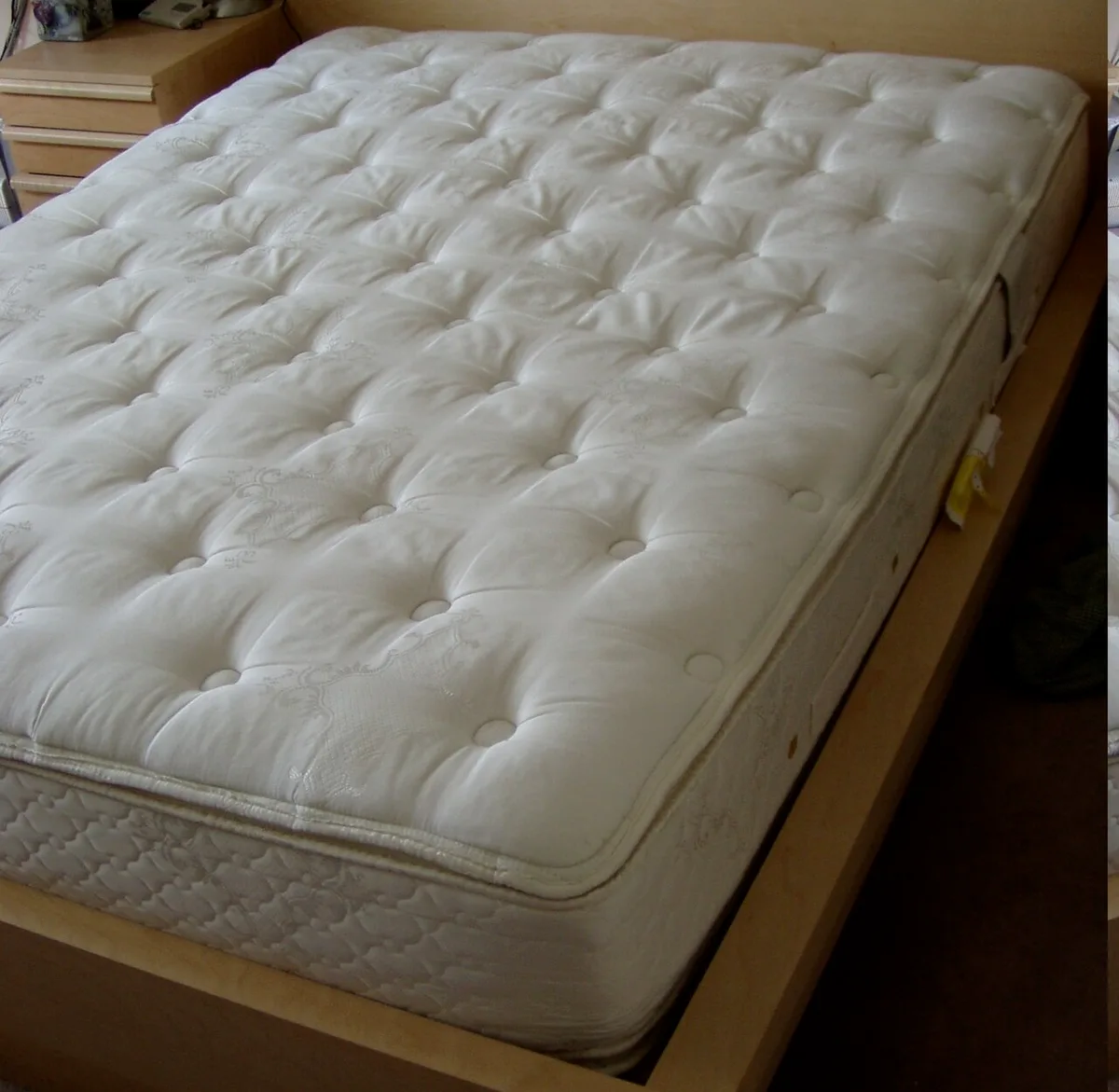
Decide where the protector belongs using the instructions for the actual products. The real sheet photograph shows fabric being fitted around a mattress, while the mattress edge illustrates why depth matters. Neither depicts a tested topper combination. Use the images to understand the components and use the specifications to settle their fit.
Price the full addition
Suppose a topper costs an assumed £90, suitable replacement sheets cost £50 and a compatible protector costs £25. The total addition is £165. If the existing sheets and protector are confirmed suitable, the assumed cost falls to £90. These figures are budgeting examples, not current prices or a recommendation to replace every item.
Keep essential changes separate from optional styling purchases. A topper's headline price may be only one part of the practical decision. Compare the complete addition with other options only after the dimensions and condition of the existing setup have been checked, and avoid claiming that a lower cost proves better value for everyone.

Read care and purchase terms before use
Save the topper's care instructions and the retailer's current purchase conditions. For the mattress beneath it, the National Bed Federation recommends following the manufacturer's own care advice. Do not transfer rotation, turning or washing instructions from one component to another merely because they sit together on the bed.
Keep the labels and measurements in a single note so that future bedding replacements can be checked against the full arrangement. The useful outcome is a documented stack with compatible pieces and a clear budget. Personal comfort remains something to assess individually, without presenting the topper as a medical treatment or a guaranteed improvement.
National Bed Federation: caring for your bed ?