Put measurements beside UK mattress names
Compare double, king and super king using dimensions, room space and the bedding you already own.
Updated:
Begin with a measured rectangle
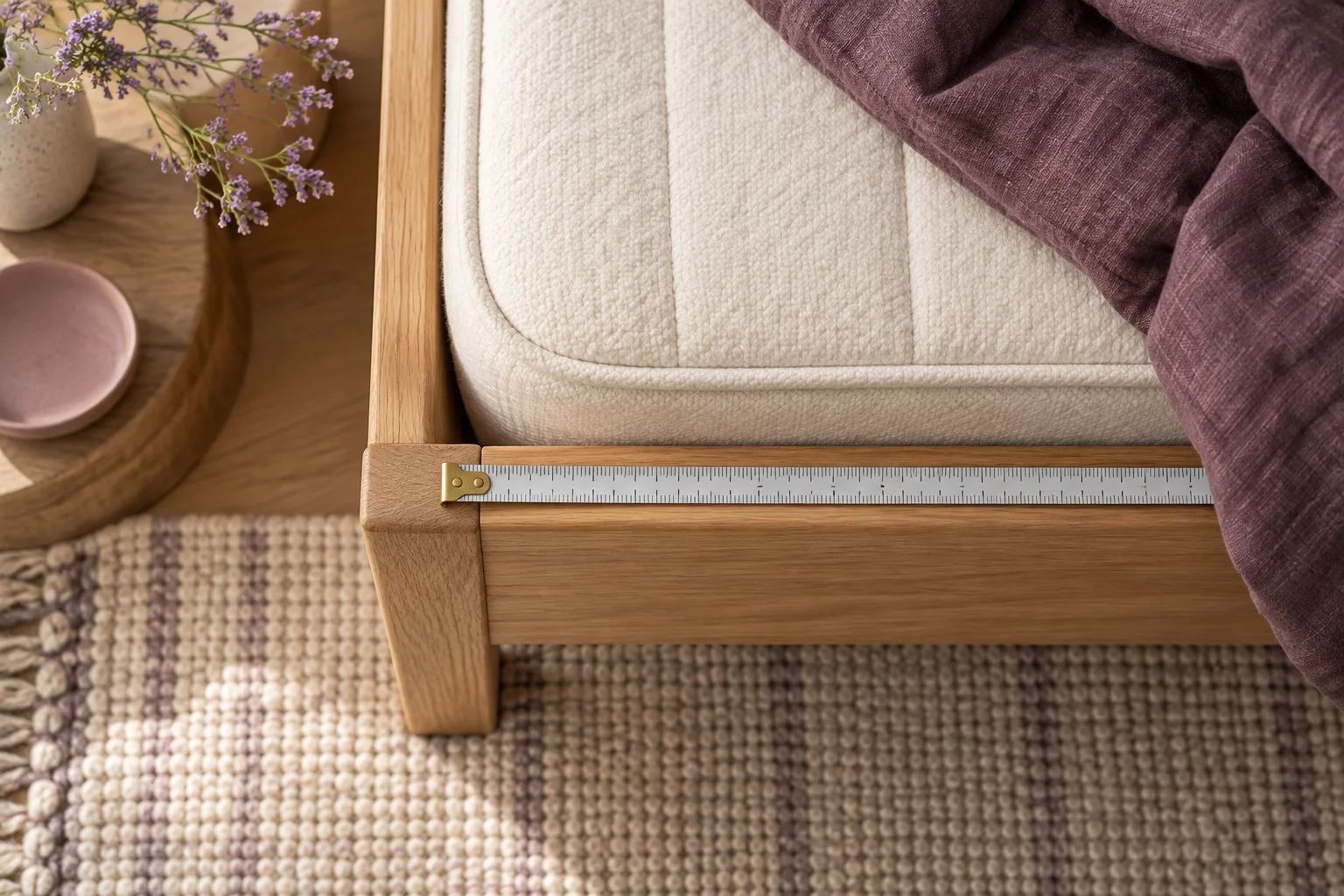
A size name is a useful starting point, but the order needs dimensions. The National Bed Federation lists a typical UK double as 135 by 190 centimetres, king as 150 by 200 and super king as 180 by 200. Its guide also warns that dimensions can vary, so check the exact item rather than treating the name as a promise.
Write width first and length second in every note. That small convention helps when comparing a retailer page with a frame manual or an imported product. Record the units too. A handwritten number without a unit can easily become an assumption that survives all the way to checkout.
National Bed Federation: shopping for a new bed ?
Compare the change you will actually receive
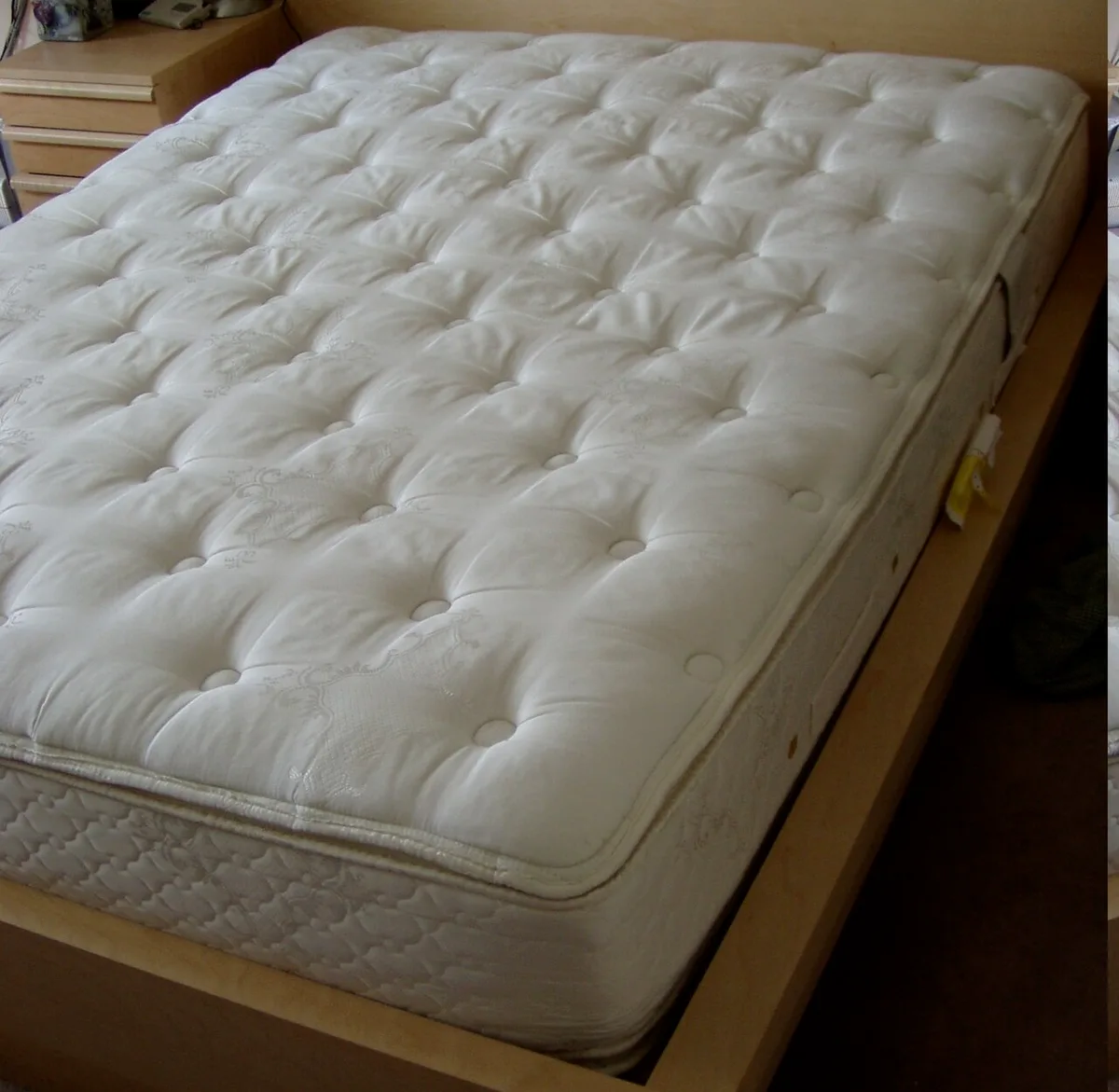
Moving between the typical double and king dimensions adds 15 centimetres of width and 10 of length. Multiplying those dimensions gives an area of 2.565 square metres for the double and 3 for the king: approximately 17% more surface area. This is calculated geometry, not a claim about better sleep or how spacious either option will feel.
Draw both rectangles on the same scale if the difference is hard to picture. Keep the comparison limited to the mattress itself. An upholstered surround, headboard or footboard can extend beyond that rectangle, and its dimensions belong in a separate line on the plan.
National Bed Federation: shopping for a new bed ?

Keep the outer frame on the same page
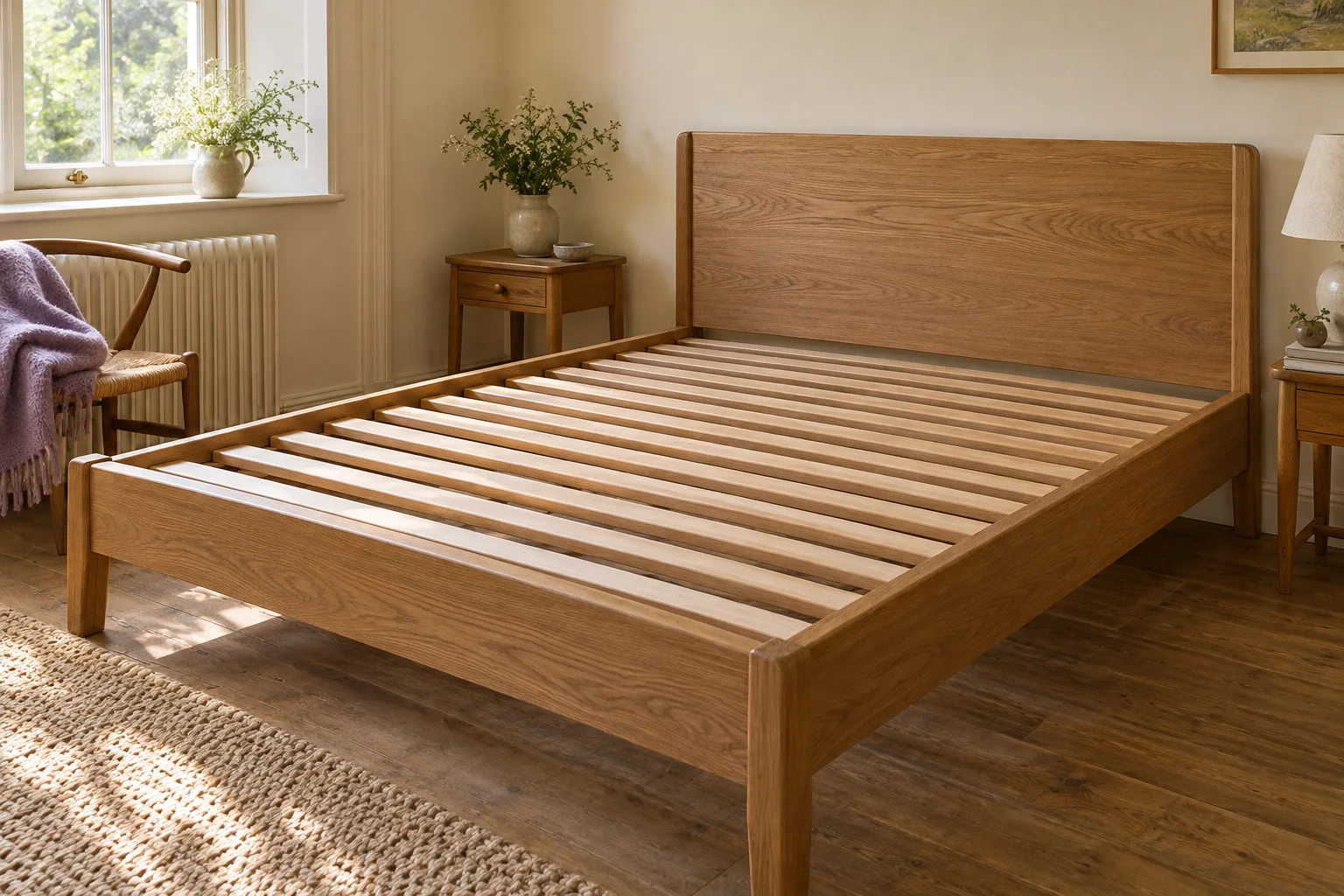
A larger mattress is only useful if the complete bed works in the room. Obtain the outer width and length of the exact frame and mark them on a floorplan. Include the position of doors, drawers, radiators and existing furniture. John Lewis distinguishes different frame and base constructions; use the selected product specification to establish its actual footprint.
Do not subtract the mattress width from the room width and call the remainder usable space. That calculation leaves out the surround. If you already have a frame, compare the mattress opening and the support requirements before deciding that a familiar size label is enough.
Count the items that change with the size
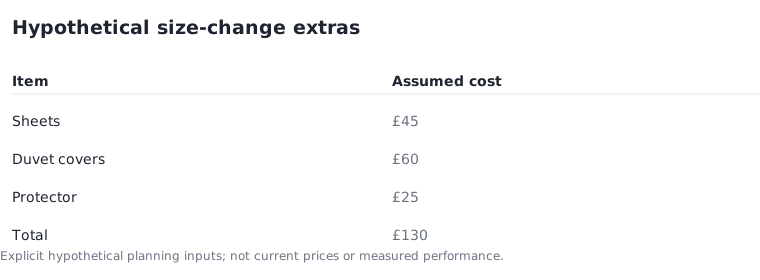
A hypothetical move to a different bed size might require £45 of sheets, £60 of duvet covers and £25 of protectors. Those assumed additions total £130. They are planning inputs rather than market prices, and they should disappear from your budget only when the retained items genuinely fit.
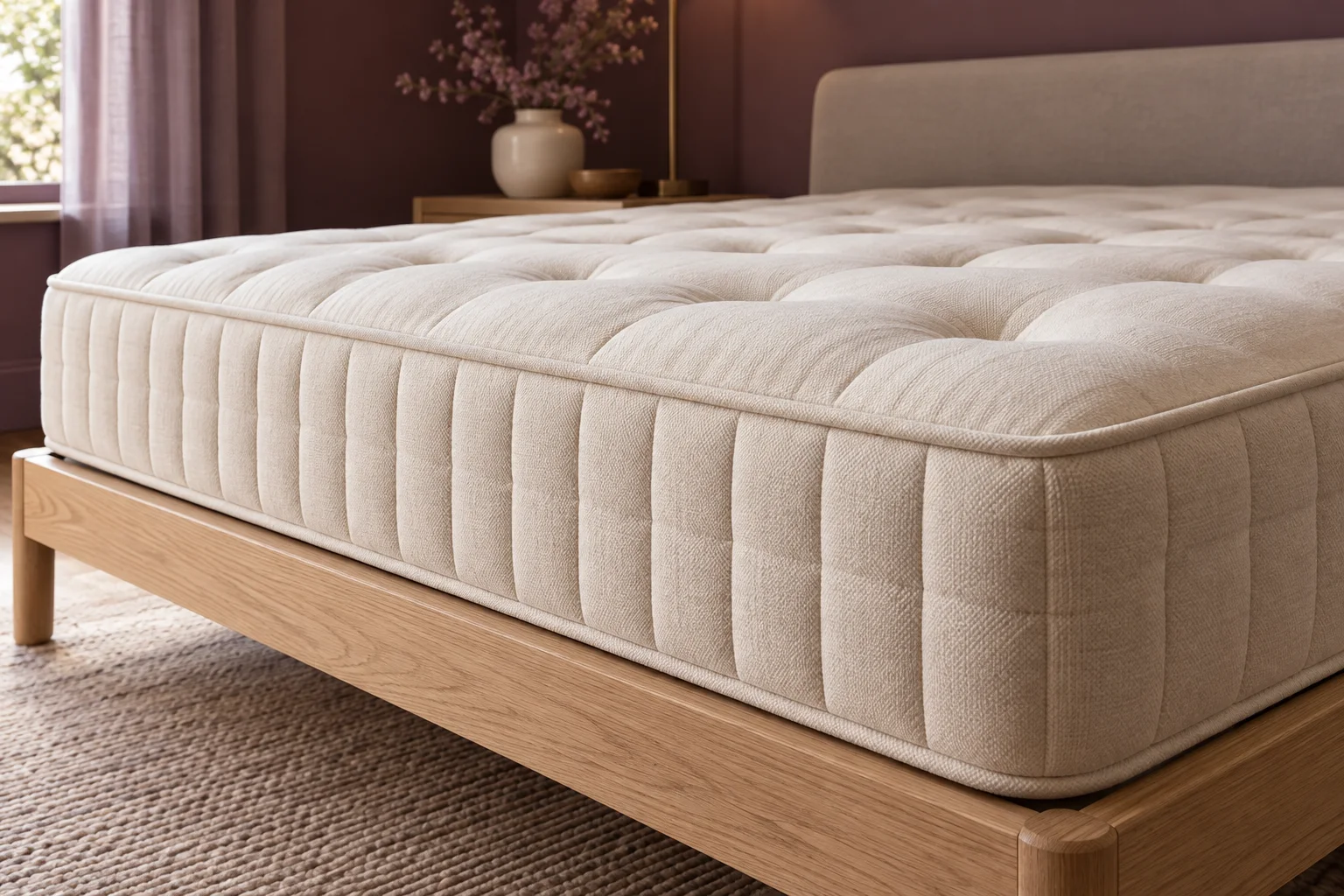
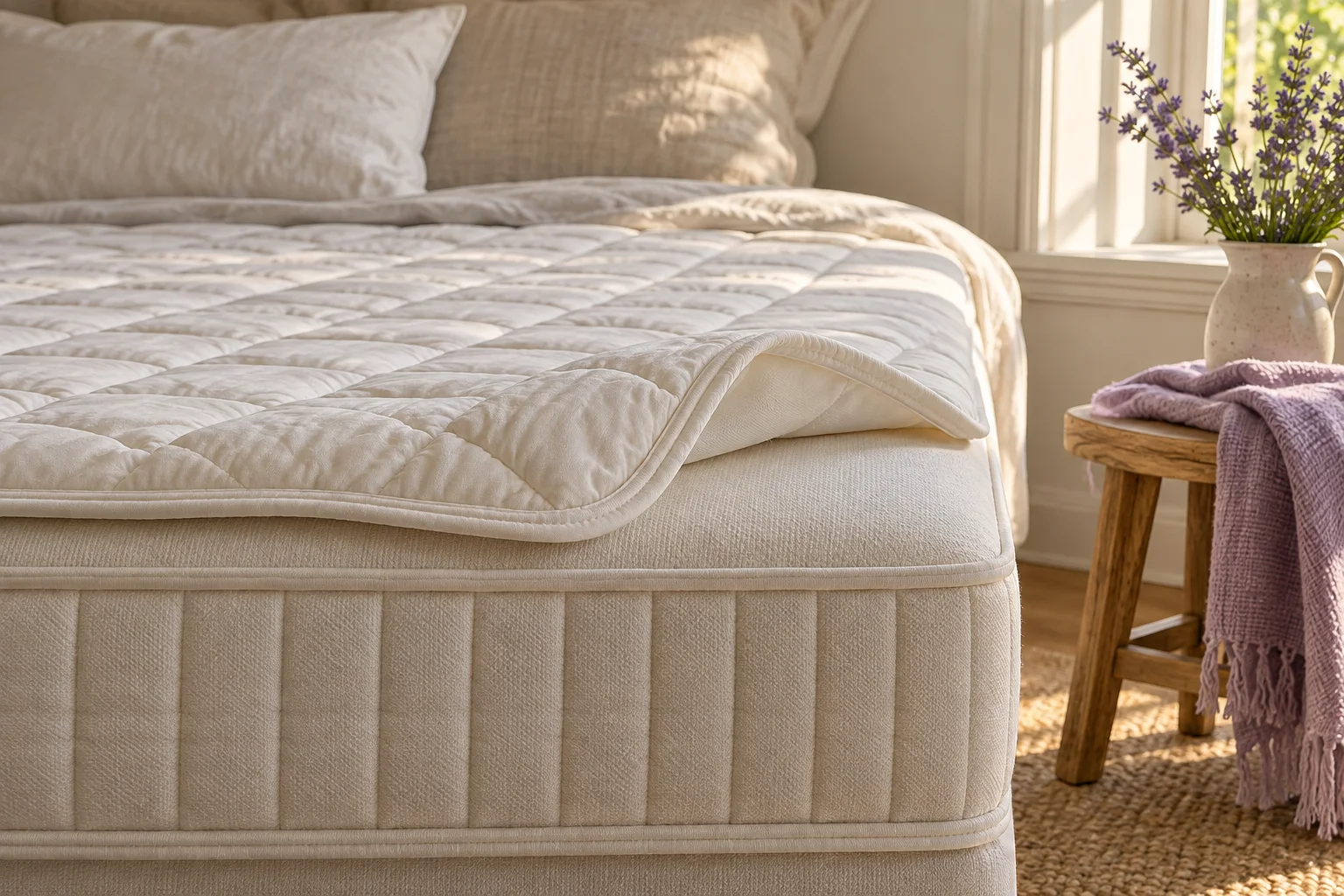
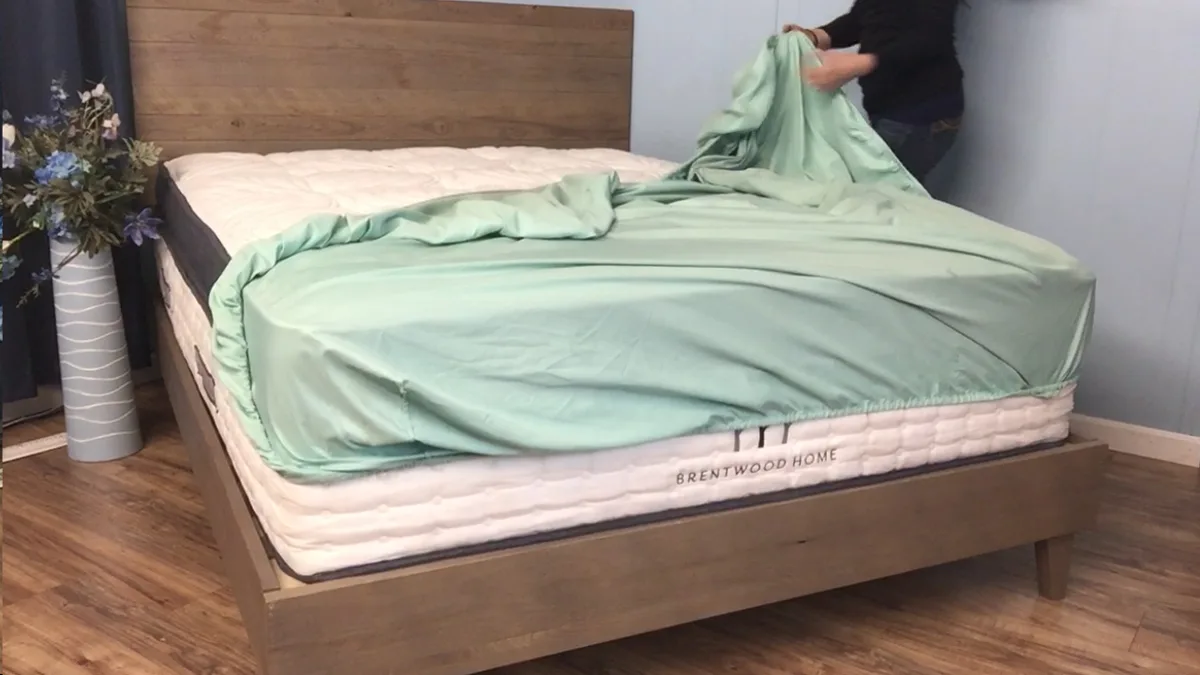
Inspect labels before buying replacements. Width, length and depth can matter to different pieces, and a cover label may refer to the duvet rather than the mattress. The photographs show separate bedding components to make that distinction visible. None establishes a standard UK size, and none is a recommendation for the photographed product.
Finish with an order cross-check
Place the frame specification, mattress specification and delivery information side by side. Check that the same dimensions appear in the basket and order confirmation. If a retailer uses an unfamiliar size name, ask for the measurements in writing before paying.
Save a copy of the specifications with the receipt. You then have a clear reference when arranging bedding or checking delivery. The purpose of the exercise is not to select the largest possible bed; it is to understand the exact size change and the practical work that accompanies it.