Calculate a duvet overhang before buying
Use a simple centred layout to understand side drop and foot-end length, with clear limits to the calculation.
Updated:

Choose the measurements that matter
Read the width and length of both the mattress and the duvet. The National Bed Federation provides typical UK mattress dimensions but advises checking the actual product. John Lewis treats duvet size as a separate bedding choice, so use the duvet's own listing rather than assuming that its size name supplies an exact measurement.
Our overhang tool uses a simplified flat rectangle. It assumes the duvet is centred across the mattress and aligned with its head end. Real fabric drapes, folds and moves, so the result is a planning measurement rather than a prediction of the appearance of a made bed.
National Bed Federation: shopping for a new bed ? John Lewis: duvet and pillow buying guide ?
Work through a centred example
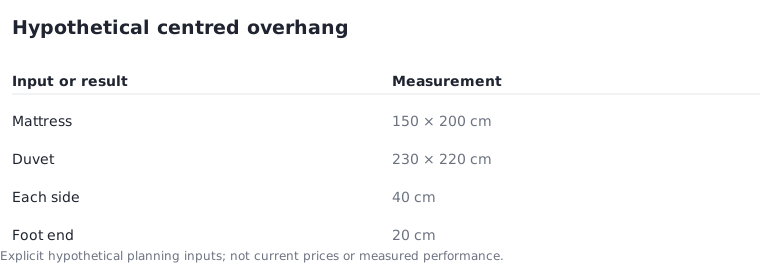
Assume a mattress is 150 centimetres wide and 200 long, and the duvet is 230 wide and 220 long. The width difference is 80 centimetres. Dividing it equally between two sides gives a nominal 40-centimetre side overhang. The length difference is 20 centimetres at the foot under the stated head-end alignment.
The duvet is about 53% wider than the assumed mattress, calculated from the extra 80 centimetres divided by 150. This percentage is a geometric comparison, not a comfort rating. None of the example duvet measurements is presented as a universal UK standard; replace them with the exact products you are considering.
Account for the actual bed shape
A deep mattress, raised footboard or tucked arrangement changes how the fabric appears. The calculator does not model those features. Sketch the bed from the side and decide whether the duvet will hang freely, sit against a footboard or be folded back near the pillows.
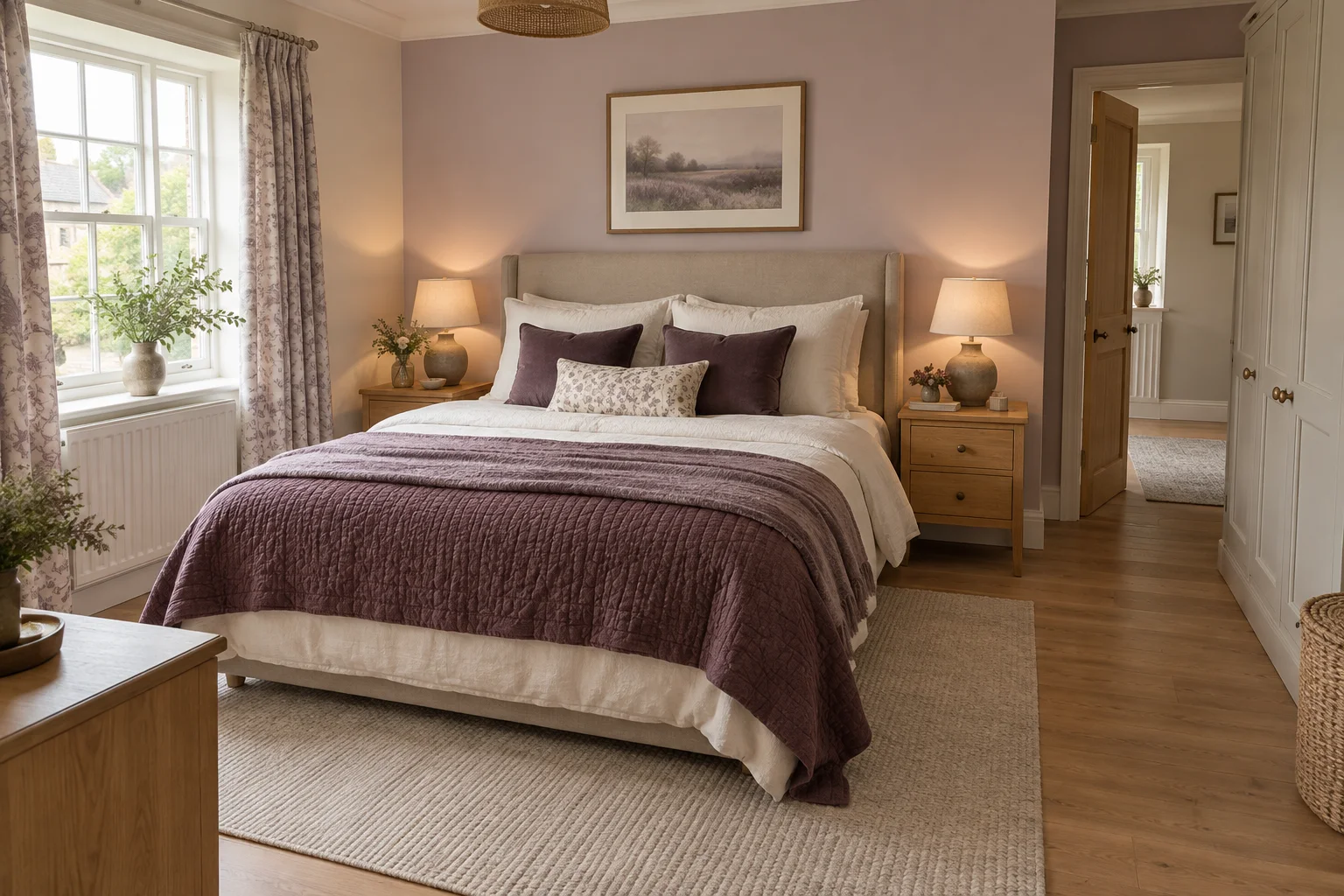
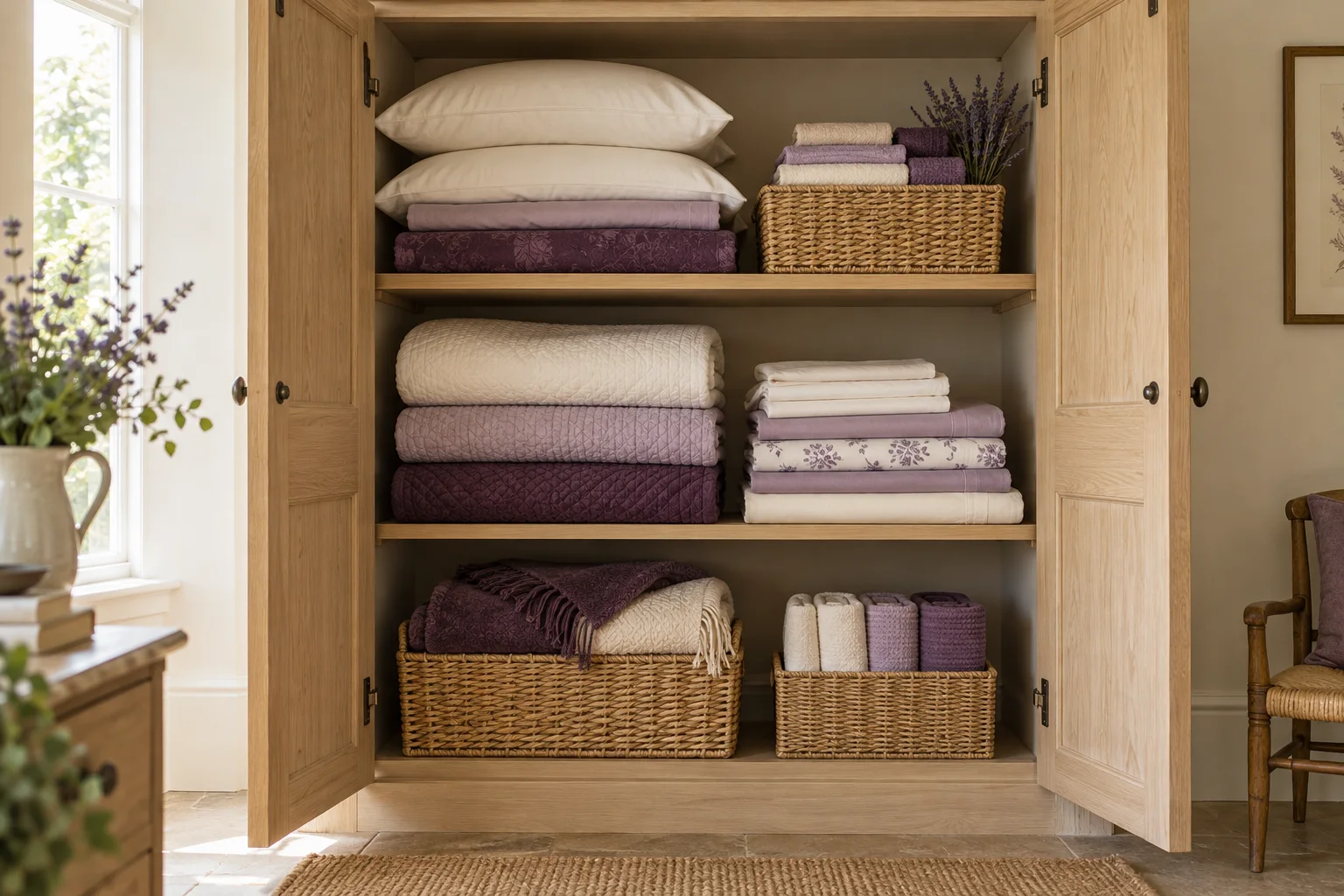
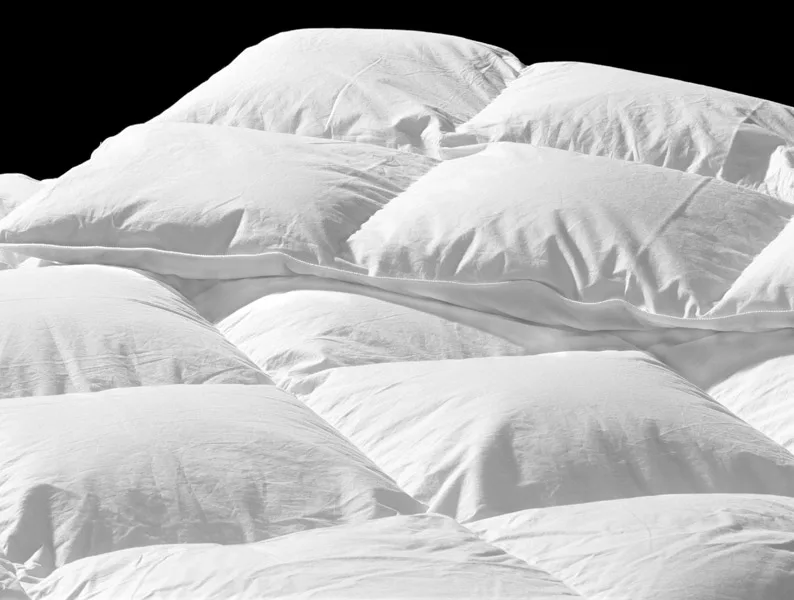
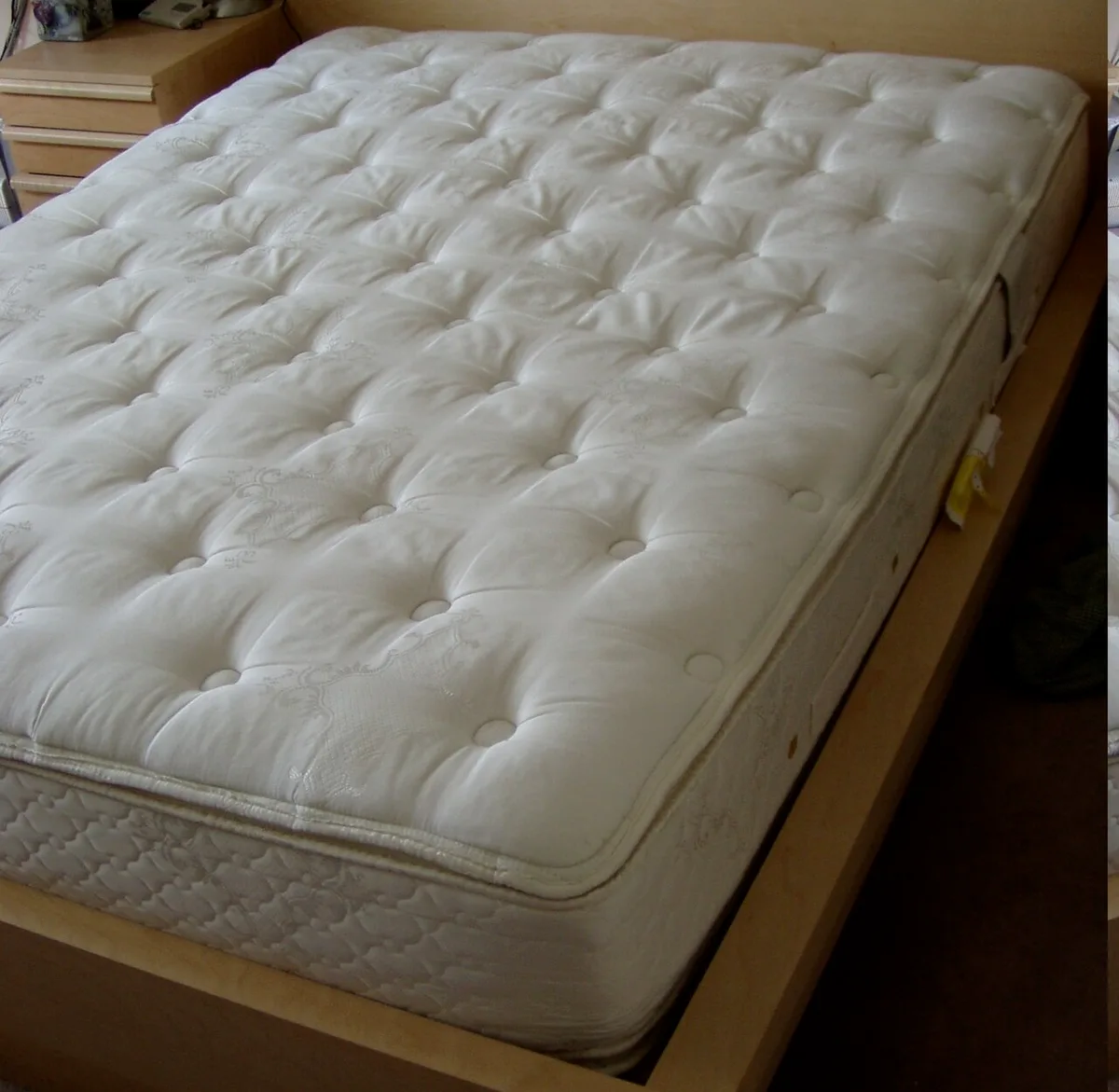
The mattress photograph shows a substantial edge and a surrounding frame, while the duvet photograph shows folded fabric. They illustrate why a flat calculation has limits. Do not use either image to infer the dimensions of your own bed. If appearance is important, compare the proposed duvet with an existing item whose drape you can observe directly.
Check the cover at the same time
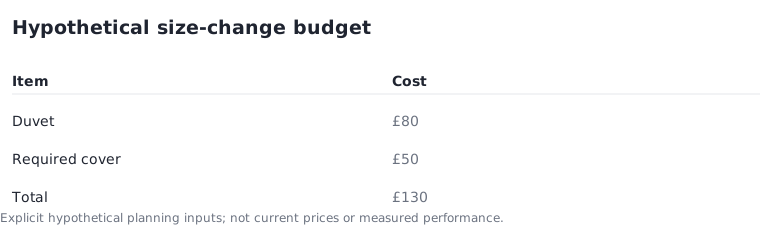
A larger duvet also needs a compatible cover. Record the cover dimensions separately and include any replacement in the budget. In an assumed purchase, a duvet costs £80 and the required cover costs £50, producing a £130 total. Retaining a compatible existing cover would leave the assumed duvet-only cost at £80.
Those are hypothetical prices, not market quotations. The point is to make the consequence of a size change visible before ordering. Check pillowcases independently rather than assuming that a duvet-cover set includes the right number or dimensions for the pillows you own.

Use the calculation as a comparison aid
Run the same calculation for each shortlisted duvet using the same mattress dimensions. Keep the head-end alignment assumption unchanged so the results are comparable. If the duvet is narrower or shorter than the mattress, the tool rejects the input as unsuitable for this particular overhang calculation rather than inventing a positive drop.
Save the chosen dimensions with the order. The result should help you explain the size difference in concrete terms while leaving room for the real behaviour of fabric. It does not establish a safe arrangement for children, a medical benefit or a guarantee of personal comfort.