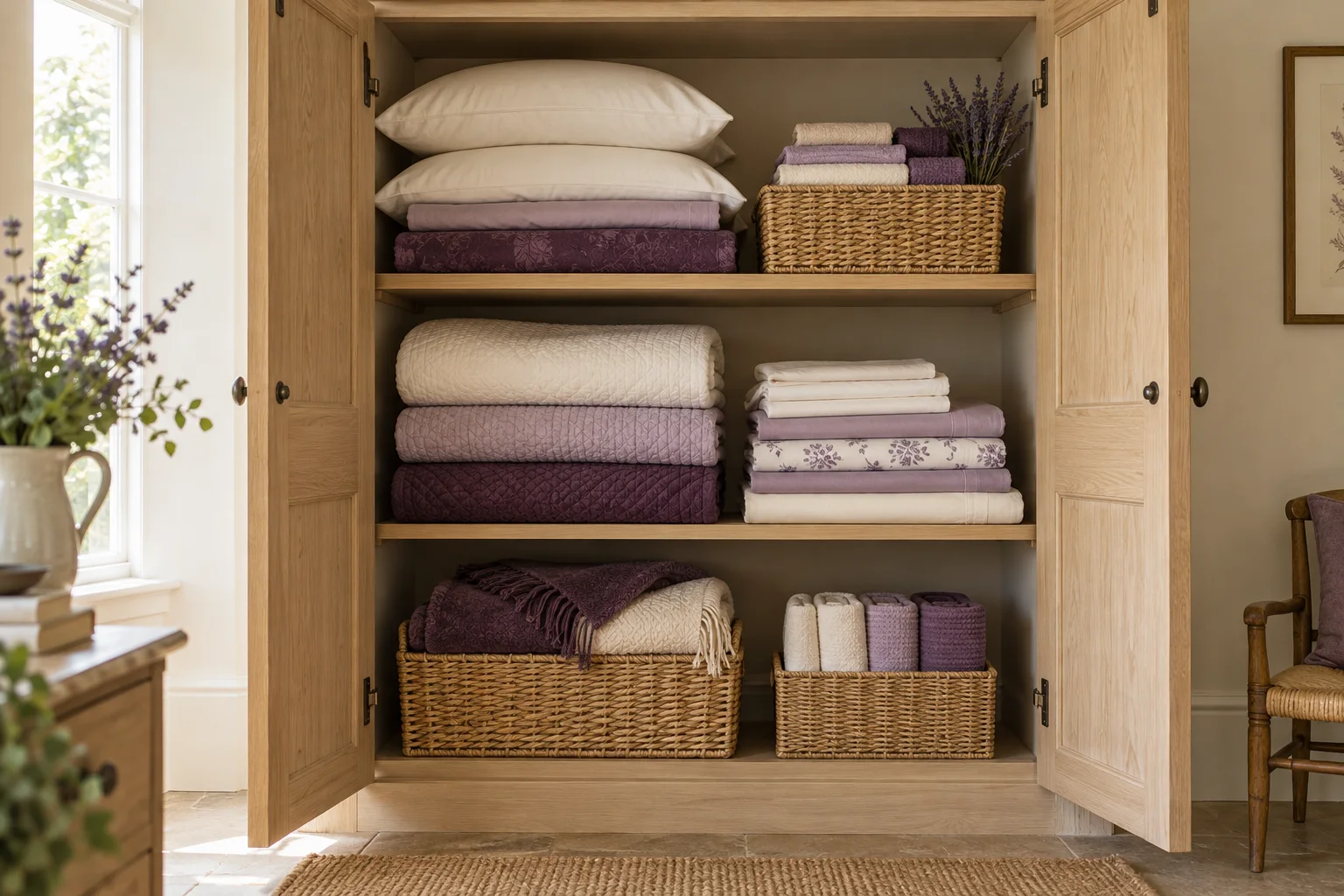
Plan a guest bed that is easy to prepare
Coordinate dimensions, spare bedding, storage and a clear setup record for a room used less often.
Updated:

Measure the bed you actually have
Begin with the existing mattress and frame, even if the guest room is used only occasionally. The National Bed Federation cautions that mattress size names do not guarantee identical dimensions. Record width, length and depth, then check the outer frame footprint separately when planning the room.
Keep the route around the bed and the opening of nearby furniture on the sketch. A room that looks spacious without luggage may work differently during a visit. This guide offers a household planning method, not an accessibility assessment or a recommendation for a particular guest's health needs. Ask about individual requirements rather than assuming one arrangement suits everyone.
National Bed Federation: shopping for a new bed ?
Make one complete bedding inventory
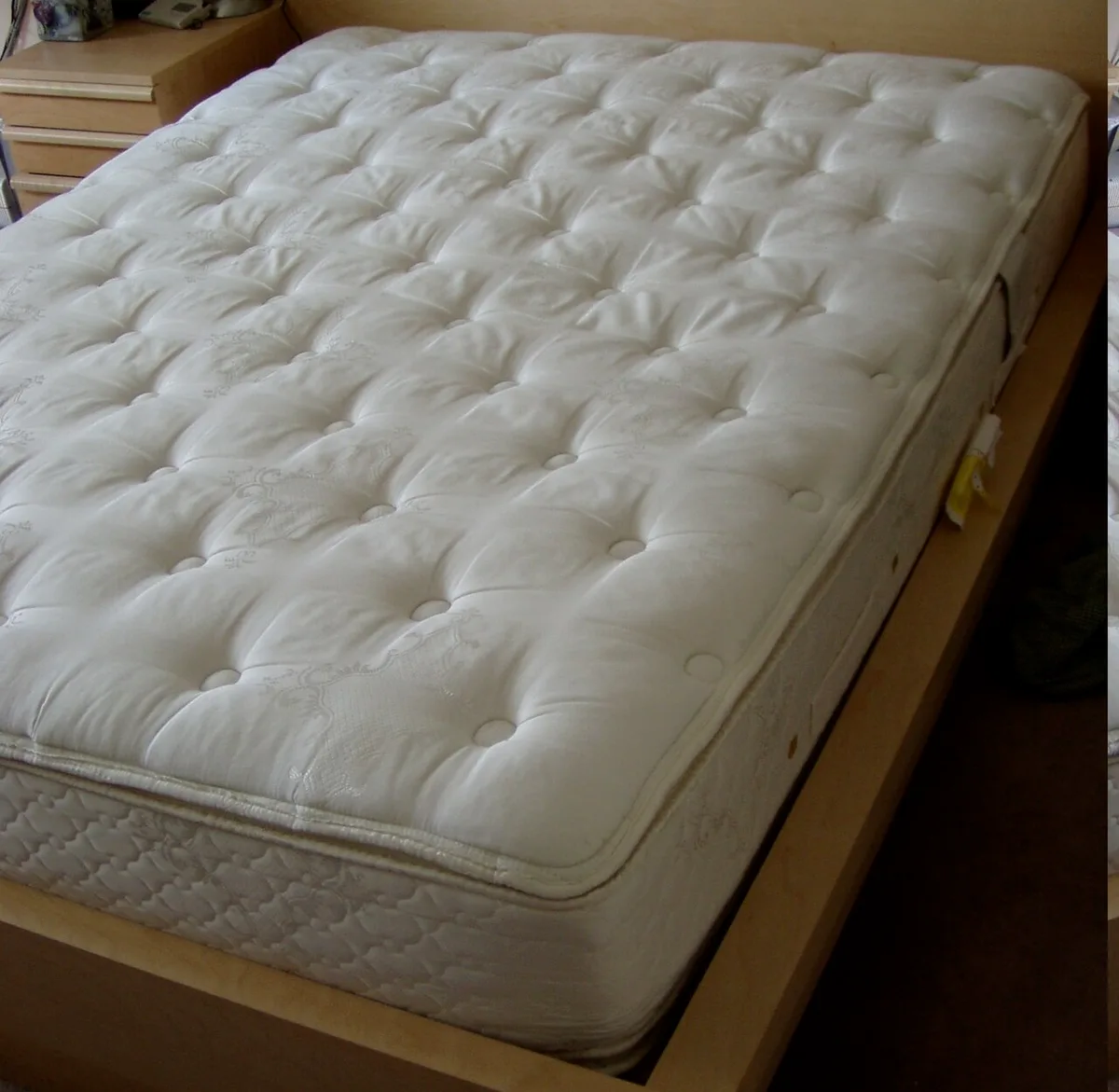
List the sheet, protector, duvet, cover, pillows and cases that belong to the guest bed. John Lewis treats duvet and pillow selection as separate decisions, so confirm each item's dimensions and care information. A matching pattern does not establish that all the pieces fit.
The licensed photographs show the components separately to make the inventory concrete. They are historical illustrations, not a recommended guest-room set. Mark an uncertain item for checking before the next visit instead of leaving it in the ready pile. A short accurate list is more useful than a cupboard full of apparently coordinating pieces.
John Lewis: duvet and pillow buying guide ?

Budget for gaps rather than a new look
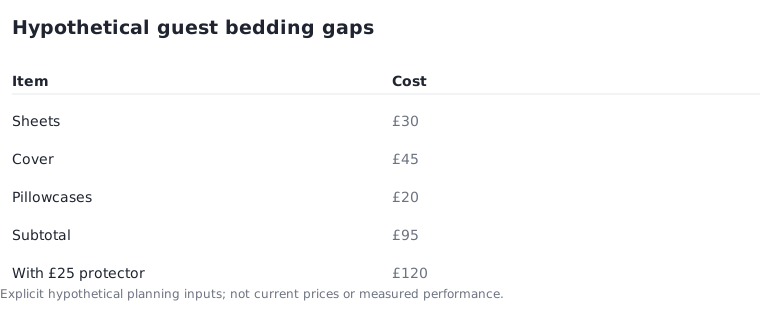
Assume the bed already has a suitable duvet and pillows, but needs £30 of sheets, a £45 cover and £20 of pillowcases. The total replacement budget is £95. Adding an optional £25 protector in this hypothetical plan brings the total to £120. These invented figures are not current prices or a statement that every item should be replaced.
Check the condition and fit of retained pieces before purchasing duplicates. Separate decorative additions from the components needed to prepare the bed. If storage is limited, include that constraint in the decision before buying a second complete set solely because it matches the first.
Make preparation repeatable
Create a simple note showing which pieces fit the bed and where they are stored. Include the actual dimensions where a size name could be confused with another bedroom. If several people prepare the room, use descriptions they can recognise without needing to inspect every label again.
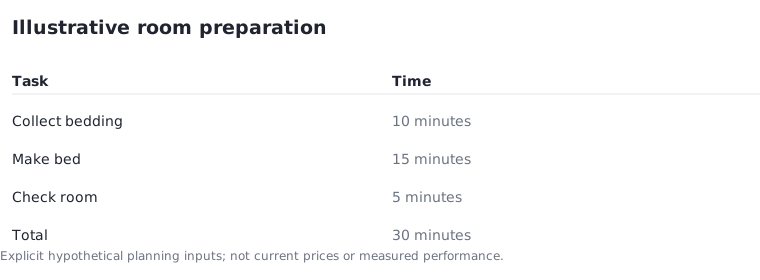
For an illustrative schedule, allow 10 minutes to collect the correct pieces, 15 to make the bed and 5 to check the room: 30 minutes total. This is a planning assumption, not a cleaning standard or a promise about the time required. Adjust it to the room, your abilities and the work involved.
Keep care instructions with the inventory
Read and retain the actual care labels for the bedding. For the mattress, the National Bed Federation advises following the manufacturer's directions. Occasional use does not justify inventing a different handling or cleaning method, and a coordinated set does not mean all pieces share one programme.
After a size change or replacement, update the inventory before putting the new item away. The useful outcome is a guest bed that can be prepared with known compatible pieces and a clear storage plan. It should support a conversation about a visitor's preferences without making unsupported promises about comfort, sleep quality or medical benefit.
National Bed Federation: caring for your bed ?