Plan the linen cupboard before adding a set
Count what fits each bed, measure folded items and make spare bedding a deliberate storage choice.
Updated:
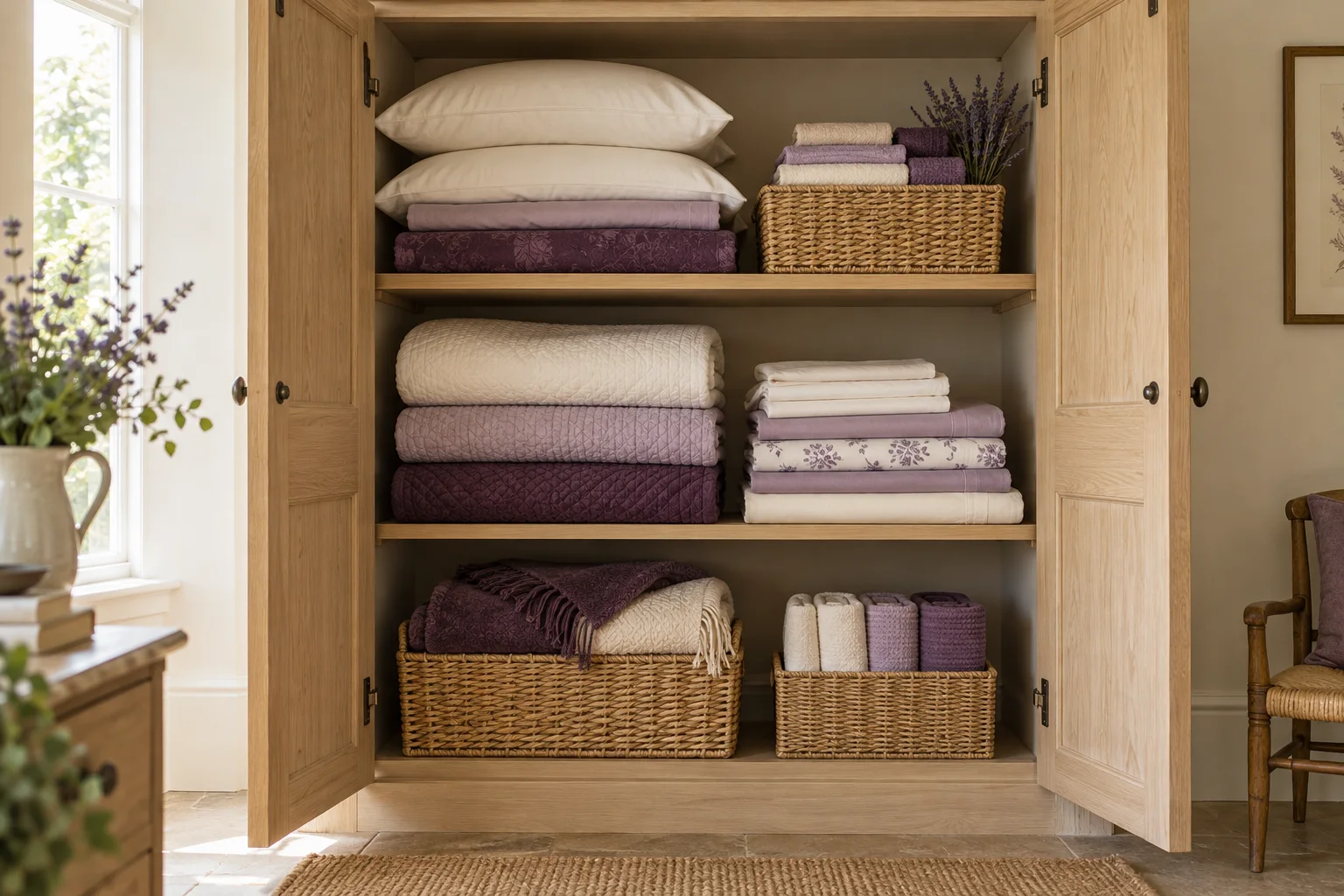
Sort by the bed each item fits
Start by identifying which sheets, duvet covers and pillowcases belong to each bed. Read the labels rather than sorting only by colour. The National Bed Federation warns that mattress size names can hide differences in dimensions, so keep the actual measurements available when deciding whether an item can be reused elsewhere.
Make separate groups for confirmed fit, uncertain fit and items no longer required. An uncertain label deserves a measurement or manufacturer check before the piece becomes part of a spare set. The aim is a useful inventory, not a cupboard that looks orderly while concealing bedding that does not fit any bed in the home.
National Bed Federation: shopping for a new bed ?
Measure usable shelf space
Measure the clear width, depth and height of each shelf, including any obstruction from hinges or door fittings. Then fold the actual items in the way you intend to store them and measure the resulting stack. A product's unfolded dimensions do not establish the size of its stored bundle.
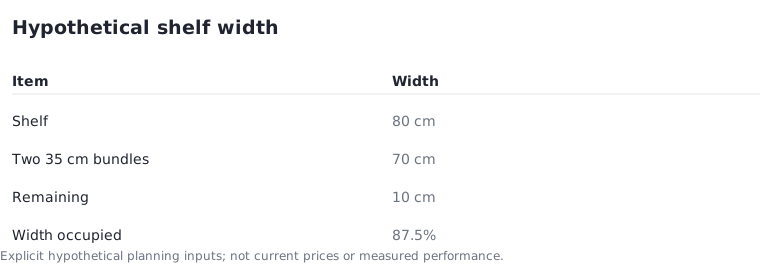
For a hypothetical shelf 80 centimetres wide, two folded bundles each 35 centimetres wide occupy 70 centimetres, leaving 10. That is 87.5% of the shelf width. It is a simple linear calculation and does not prove that the bundles fit in depth or height; those dimensions need their own check.
Count complete usable sets
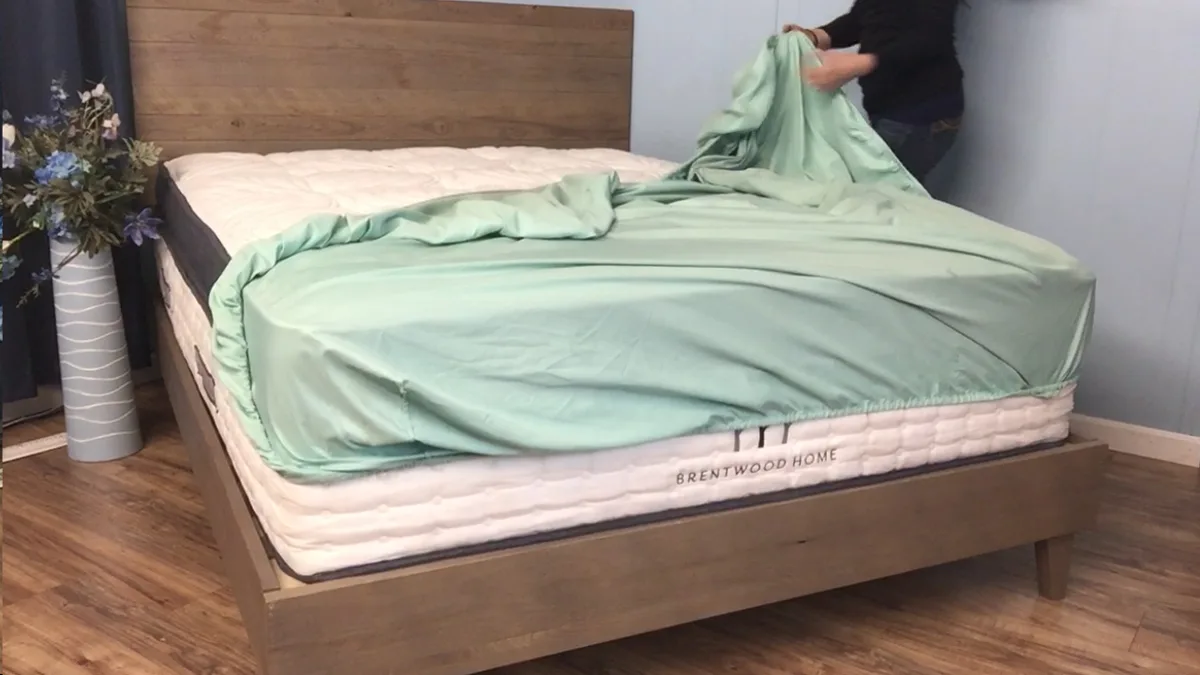
List the pieces needed for one change of bedding and identify which are already present. John Lewis treats duvet and pillow sizes as separate choices, so a matching cover pattern does not establish that every piece in a set is suitable. Check pillowcase quantity and dimensions independently.
The real duvet, pillow and fitted-sheet photographs show different components that take different amounts of space. They are historical illustrations rather than a recommended household inventory. Decide the number of spares from your own laundry arrangements and available storage, not from the number of decorative layers shown in a styled bedroom.
John Lewis: duvet and pillow buying guide ?

Price storage only after measuring
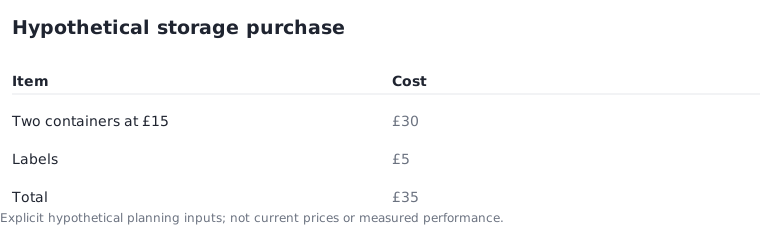
Assume two suitable containers cost £15 each and labels cost £5. The total storage purchase is £35. If the existing shelf works without containers, the same illustrative label-only plan would be £5. These invented amounts are budgeting examples, not current offers or an instruction to buy organising products.
Compare container external dimensions with the cupboard opening as well as the shelf. A box fitting the internal space may still be awkward to remove. Check the care and storage advice for the textiles before choosing a container, and avoid compressing an item solely to make a photograph-like arrangement.
Make retrieval easy to repeat
Put a clear description with each group so that another household member can identify the right pieces. Include dimensions where names could be confused. Keep less certain items out of the ready-to-use group until their fit has been resolved.
Review the inventory when a mattress or duvet changes size. A new purchase can leave older covers without a matching item, even if they remain in good condition. The useful result is a cupboard that supports the beds you actually use, with visible space and a deliberate number of spares rather than an expanding collection of loosely related bedding.